Introduction

Mundus Atrox is a campaign for Dungeons & Dragons 5th edition (2024).
It is a high-Mana world driven by extreme climate and geography, with elements of steampunk and indications of a techno-magical collapse of Civilization in ancient times.
Dwarves and Gnomes hunker down in their Mines, Humans flee the worst weather in mobile cities, and Elves chase the Perpetual Spring in flying castles.
Dragons rule the sky. Unnatural and strange beings stalk the land. Almost anything fixed in place is battered or corroded to oblivion within a few seasons.
Strewn across the world, ancient Artifacts range in size from a marble to a city. Their effects vary from mundane to world-altering, with size being little clue to their potency.
The search for these items, and encounters with mythical races and guardians, become the catalyst for adventure.
Sky and Seasons
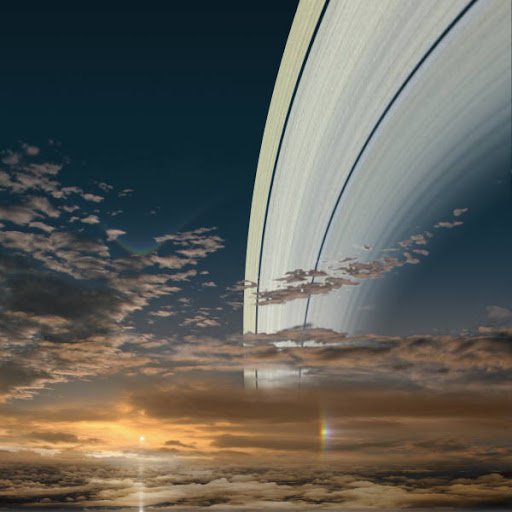
The day and night cycle on Mundus is tied to the seasons.
Springrise is when the Sun rises in the West. It lasts for about 24 hours, during which time the paths to The Feywild are open. The skies clear of Winternight’s clouds and the brilliance of the Arch can be most clearly seen.
During Summerday the Sun rises high in the sky, circling the horizon but never setting, bringing forth the great mists from the Ocean that is the Enclouding. The nearly constant daytime overcast lasts for ~1400 hours, and the climate is hot and steamy. The flora and fauna go into overdrive, making the most of Summerday before the next Winternight.
With Autumnset the Sun sets in the West and the Enclouding dissipates. Also lasting 24 hours, the skies again show the Arch, and the paths to The Shadowfell open.
Winternight is the long darkness, with lots of snowfall and, when the clouds dissipate, the Arch spans from horizon to horizon, causing perpetual twilight. Most animals migrate or hibernate, and the Undead emerge.
The Arch is thickest in the higher latitudes of Ishtar, although reports of distant traders say it is thin in the skies of Aphrodite. The Vigils are a grouping of bright stars which move across the night sky in intricate patterns.
The Sky Elves say Mundus is a giant sphere, and their Castelas follow the Perpetual Spring, the narrow band of Springrise between Summerday and Winternight which they say circles the world.
The Arch
In the earliest seasons of the world, the vast lands were empty save for two mighty races: the Dragons and the Giants. These primordial powers moved across a world still finding its shape, each convinced that only their vision could endure.
The Dragons, vast and self-directed, claimed the open sky and the long horizons beyond it. They envisioned a world without boundaries—where growth and transformation would decide what deserved to persist. The Giants, immense and deliberate, set their hands to stone and soil, shaping mountains, valleys, and foundations. Their aim was not freedom, but stability.
One Springrise, a Dragon called Aeloria and an ancient Giant named Grondar are said to have met upon Theia. They did not meet as friends, but as representatives of incompatible futures. Their debate was fierce. Aeloria traced burning arcs through the sky, marking what might yet be, while Grondar struck the land, measuring what must be held in place.
As their contest escalated, the world itself began to strain. Sky and stone alike threatened to fracture under the weight of opposing intent. It is said that both perceived, in that moment, that unrestrained conflict would leave nothing worth claiming.
What followed was not reconciliation, but alignment.
Aeloria spoke of passage—of a structure that would allow motion without surrender.
Grondar answered with measure—of a form that could endure such motion without collapse.Together, they raised the Arch. Dragonfire carried fragments skyward, while Giant strength gathered and set them, bending swarms and stone into a vast span. The Arch did not unite their realms so much as contain them, creating a controlled crossing between Mundus and Aether.
The Arch stood as a boundary made mutual—a compromise etched into the world itself.
In time came the Enclouding, and the Arch passed from common sight, revealed only during Springrise and Autumnset. Whether this concealment was deliberate or an unintended consequence is unknown.
Few now remember the true purpose of the Arch. Fewer still agree on whether it represents cooperation, restraint, or the first admission that neither Dragons nor Giants could shape the world alone.
Geography
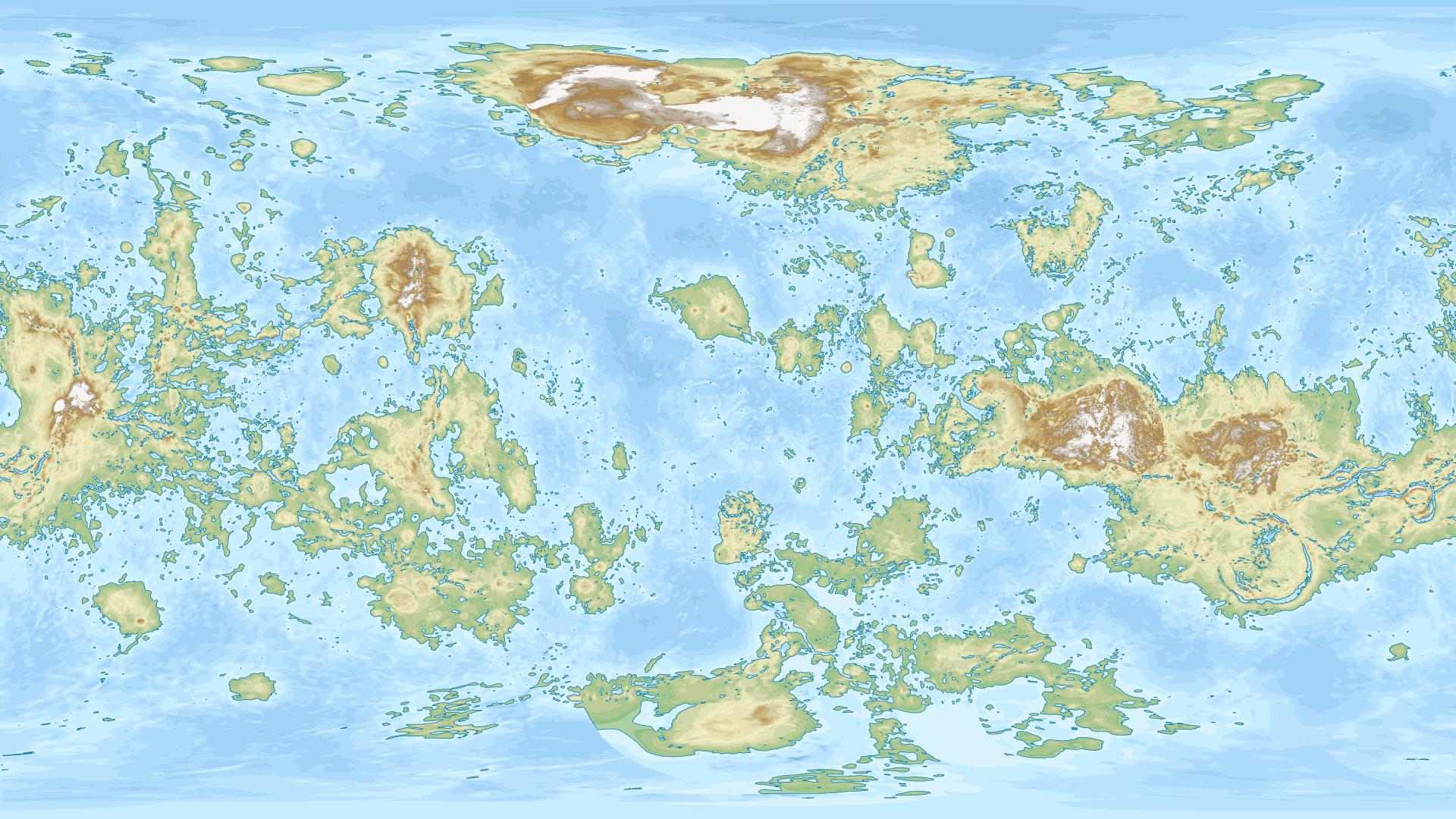
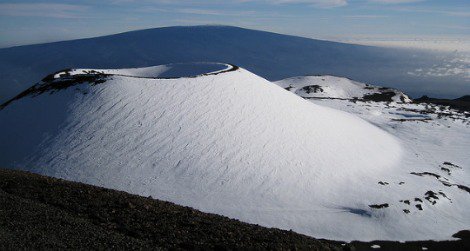
The majority of terrain is flat plains with crinkle ridges and basaltic rock, weathered by sudden and common flash floods (in Summerday) and avalanches of snow (in Winternight). Mountain ranges are jagged, marked by broken escarpments, sharp caldera, and intense winds that can strip flesh from bone.
There are three known continents:
- Ishtar is the northernmost and most hospitable
- Aphrodite is the larger and more dangerous, straddling the equator
- Lada is the unexplored southern continent
Countless islands lie between.
There are large chains of volcanoes throughout Mundus. The tallest volcano is Maxwell in Ishtar, but the largest is Theia in Aphrodite. These shield volcanos are hundreds of miles across, and the lands are crisscrossed with lava tubes and vents, making overland travel across (and even over) dangerous.
There are few large permanent rivers on each continent, which often change their course during the Summerday snow-melts.
Oceanography
Oceanum spans the entire world. Although the winds are mild at sea level compared to the tempests at altitude, they gather force for thousands of miles, and along with the tremendous ocean-crossing waves, make sailing upon the surface a hazardous affair. The skies above Oceanum are often no better, with great turbulent masses of clouds tossing even the largest Castela about. The only regular travelers across Oceanus are the mysterious Submersible Urbs, such as Waterdeep.
Climate

The air is thicker, and the climate is hot and wet during Summerday, and cold and wet at Winternight.
Autumnset and Springrise are the most temperate, pleasant climes.
Winds are gentle to non-existent in the plains, increasingly stronger with higher altitudes. When the air smells rotten, becomes extremely dry, and turns greenish-yellow, almost everything finds shelter from the Acid Rains.
Weather by season can be generated from Donjon’s Random Weather Generator.
Flora and Fauna
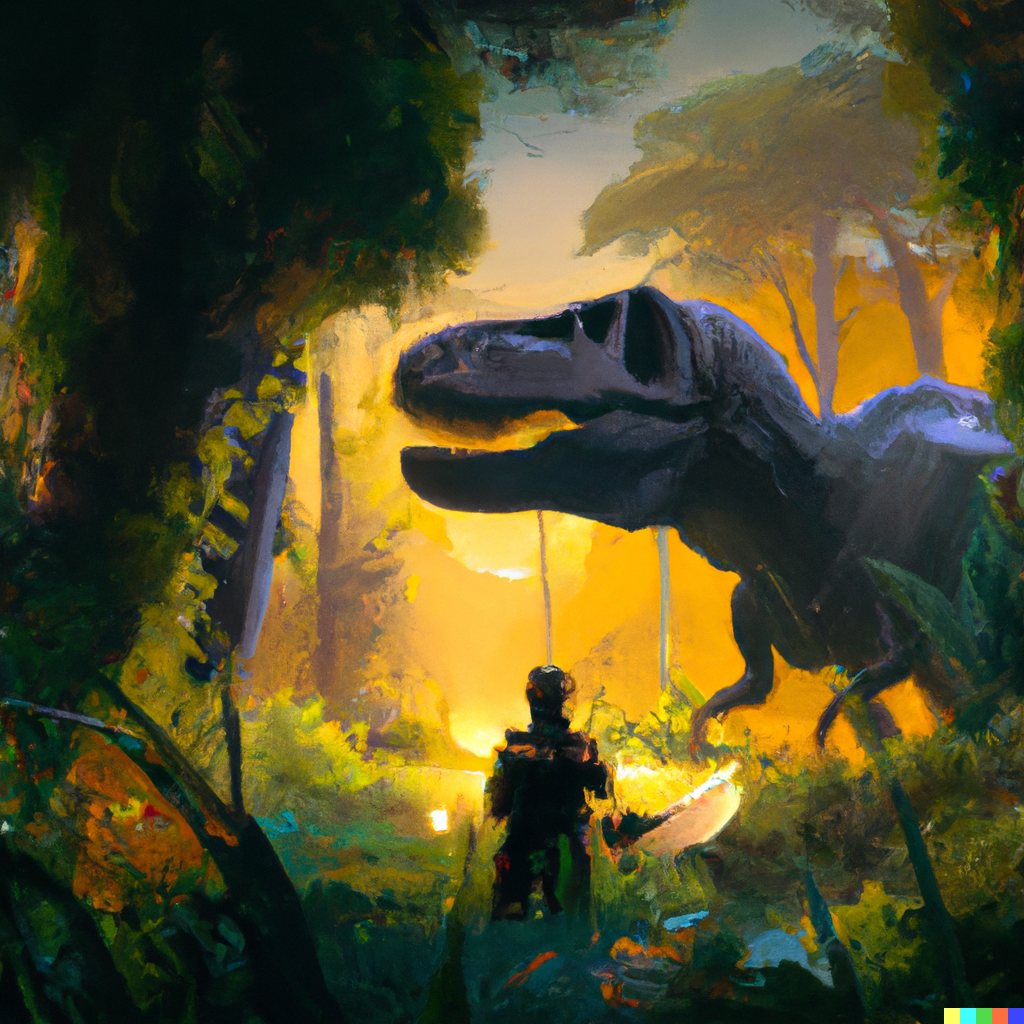
There is a tremendous variety of flora and fauna. Land animals tend towards gigantism, and Oceanus contains vast denizens in its mysterious depths. Tremendous flocks of avian and other creatures stretch for miles and continuously wheel about the skies, often unseen through the Enclouding but discerned by the tremendous racket of their calls. Plants and Animals both have strange and mysterious abilities, and are often harvested or hunted for their magic.
The jungles of Ishtar resemble the Pacific Northwest, with giant colonies of Sequoias that grow on the plateaus and mountain slopes. The jungles of Aphrodite have quintuple canopies of rubbery and flexible plants which die or go dormant during Autumnset and Winternight, only to grow again during Springrise and Summerday.
Dragons
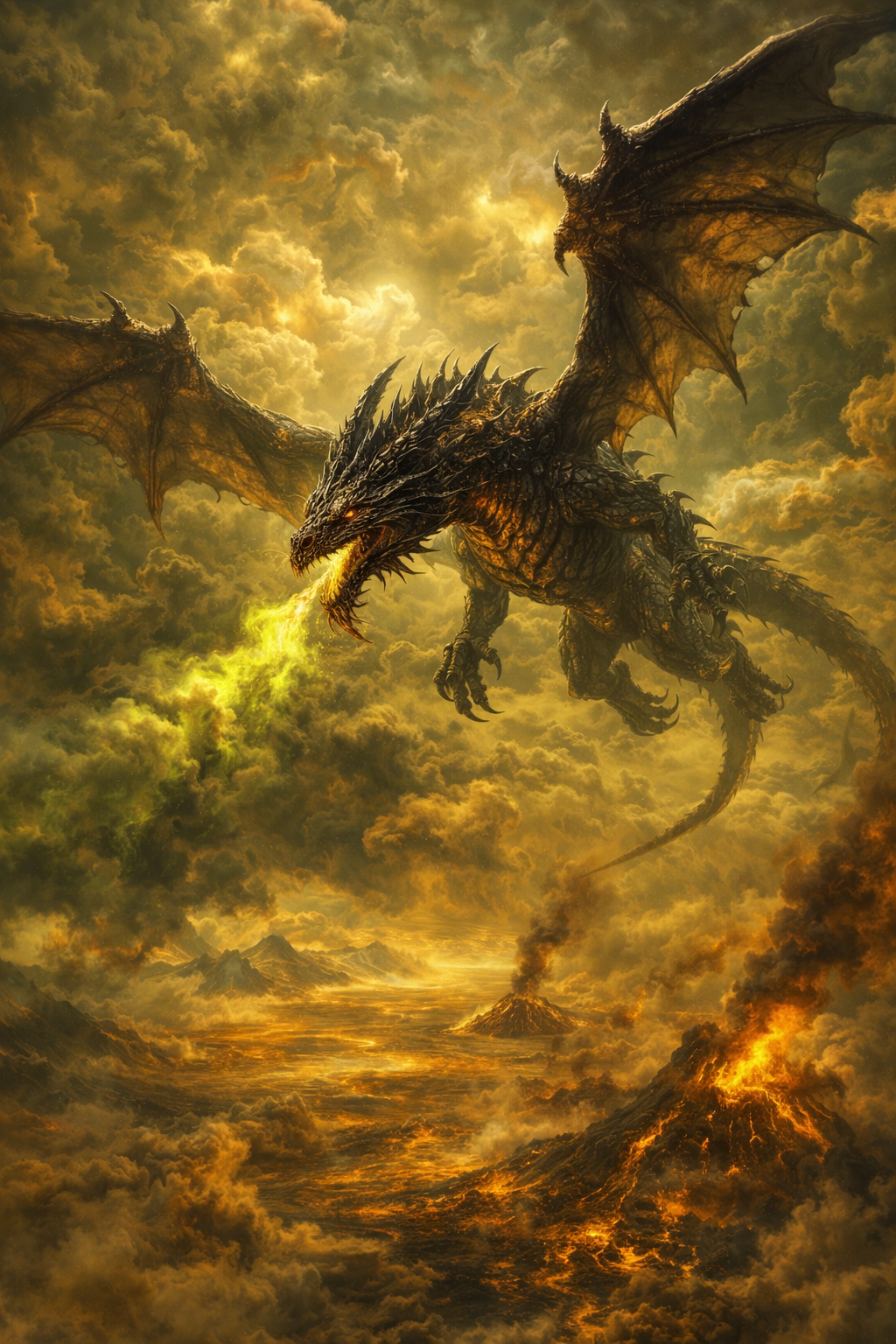
Dragons—known in ancient tongues as the Dracos—are among the most enduring and self-willed powers in existence. They are not merely apex predators of the sky, but living expressions of continuity, accumulation, and transformation. Where other beings are shaped by the world, Dragons reshape themselves across time.
They are vast, intelligent, and singular in purpose.
Origins Beyond Memory
In the earliest ages of Mundus, Dragons stood apart from the forces that sought to order and stabilize the world. They rejected imposed limits and predefined roles, choosing instead to pursue the fullest expression of their own potential.
Dragons believe that power is proven through endurance and growth. To persist is to justify existence. To accumulate is to refine the self.
This philosophy set them in direct opposition to the Giants, whose vision demanded hierarchy, constraint, and adherence to an original design.
Hoards and Continuity
A Dragon’s hoard is not mere greed. It is an extension of identity.
Artifacts, precious metals, and works of exceptional craftsmanship are gathered, curated, and preserved—not for commerce, but for continuity. Each hoard represents accumulated history, stored potential, and proof of survival across ages.
Gold and platinum are prized not only for rarity, but for their resistance to decay. Dragons value what endures.
Many an Elf, Dwarf, or Gnome has bargained for life or favor by offering works of lasting worth rather than transient wealth.
Lineage and Transformation
Dragons do not view lineage as ancestry alone, but as a mechanism of persistence. Bloodlines, drakes, and lesser kin are experiments in continuity—means by which a Dragon’s influence persists even as forms change.
Over time, Dragons transform. Size, breath, and temperament evolve. Some retreat into deep isolation, emerging only after centuries. Others fracture into variants shaped by environment, Mana saturation, or prolonged hoarding.
Change is not failure to a Dragon. Stagnation is.
Dragons in the Present Age
Dragons are few, but their presence warps the regions they inhabit.
They winter in established lairs and emerge during Springrise, when accumulated energy and hunger compel action. Vast herds vanish. Trade routes bend. Kingdoms negotiate or fall.
Dragons do not rule in the manner of kings. They exert gravity rather than authority.
Relationship to Magic and Mana
Dragons do not channel Mana as mortals do. Mana gathers around them naturally, drawn by scale, age, and accumulated presence.
- Mana pools within Dragon lairs without ritual.
- Blight is often tolerated, even exploited, as a catalyst for transformation.
- Dragons are resistant to Mana Burn, though excess instability may drive mutation rather than exhaustion.
Where Giants see failure, Dragons see opportunity.
The Long View
Dragons do not concern themselves with the immediate fate of Mundus. They measure time in epochs, not lifetimes.
Some legends suggest Dragons believe the world exists to be tested—stressed until only what can endure remains. Whether this philosophy represents wisdom or indifference remains debated by mortal scholars.
What is certain is this:
Dragons persist because they choose to.
Fey
The Fey are a group of ancient, powerful, other-worldly Beings that left their mark upon the world and races of Mundus. Much speculation but little fact surrounds them. Some Barbaria worship them.
Some Fey live upon Mundus, entering and leaving during Springrise, when the Feywild is accessible.
Giants
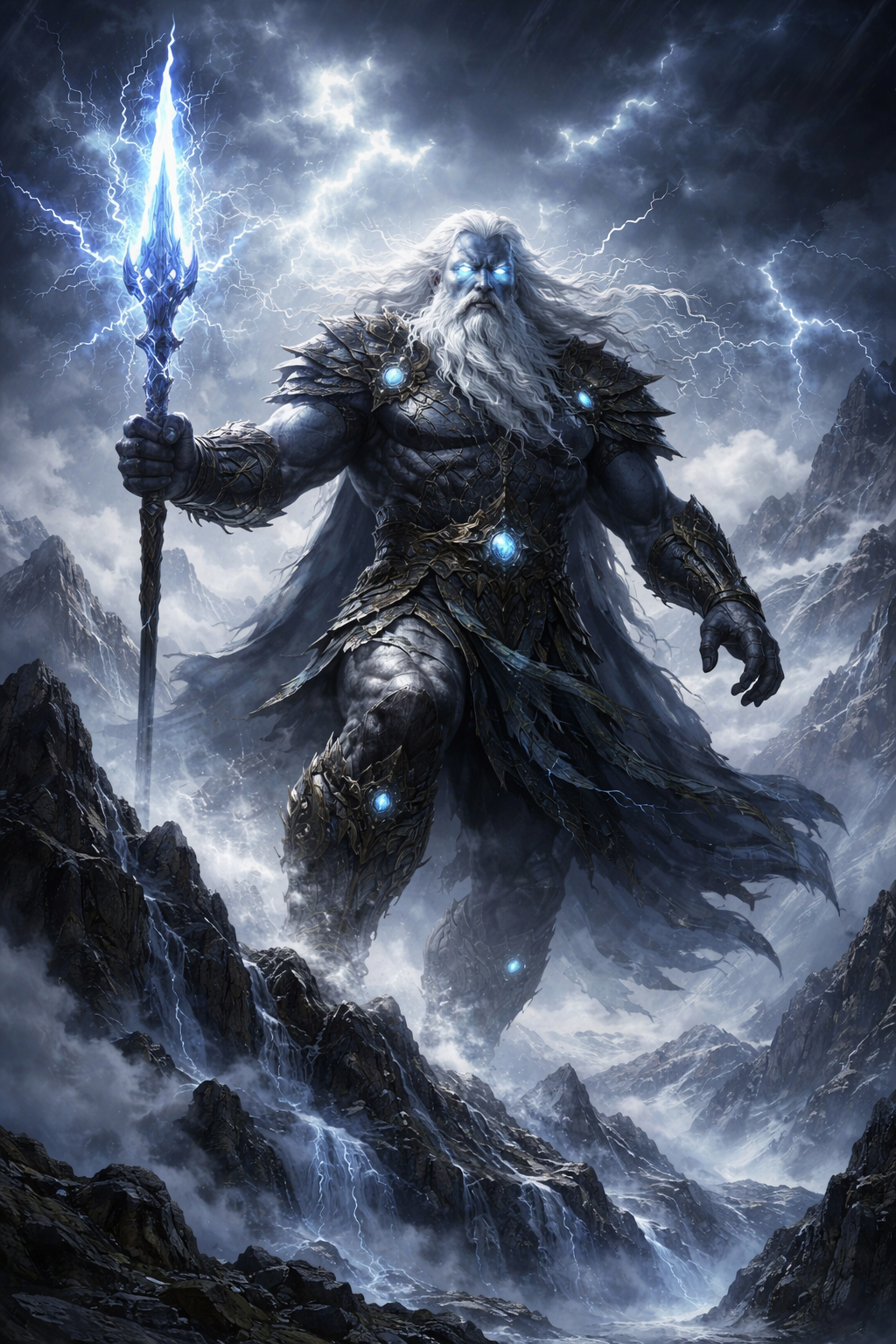
Giants and Dragons are among the oldest powers in existence, predating the living world of Mundus as it is now known. They were not merely early inhabitants, but opposing intelligences present at its ordering—each embodying a fundamentally different answer to the question of what the world should become.
Where Dragons pursued the fullest expression of power through growth, accumulation, and self‑directed evolution, Giants sought fulfillment through structure, hierarchy, and the faithful execution of an original design.
The Ordering of Mundus
Before seas bore life and skies knew weather, Mundus existed as a raw, hostile expanse—rich in potential but unfit for habitation. The greatest Giants stood among the World‑Forgers, vast minds tasked with rendering the world stable, bounded, and enduring.
They did not create life so much as prepare a place for it.
Mountains were raised as stabilizing masses.
Oceans were set within measured basins.
Invisible currents of Mana were aligned into predictable pathways.
The work of the Giants was systematic and precise. Mundus was not born by chance—it was made viable.
Opposing this vision were the eldest Dragons, who believed that the world should not be constrained by imposed limits. Where Giants enforced parameters, Dragons encouraged unchecked growth. Where Giants defined acceptable outcomes, Dragons sought transcendence beyond any intended purpose. This divergence defined the first great conflict.
The Ordning and the Architects
The Ordning is not merely a social hierarchy—it is an echo of the Giants’ original mandate. Rank reflects closeness to the act of world‑shaping and the authority to interpret its intent.
At the apex of the Ordning stand the Storm Giants.
Storm Giants are believed to be the closest surviving inheritors of the World‑Forgers’ perspective. Their dominion over sky, sea, and vast distances reflects a worldview measured at planetary scale. Their oldest traditions speak of ancestors who “set cycles in motion” and “tuned the world until it held.”
Cloud Giants occupy a transitional role beneath them, concerned with observation, oversight, and the preservation of long‑term patterns. They are less concerned with shaping the world than with ensuring it continues to function as intended.
Other Giant kin—fire, frost, stone, and hill—represent increasingly localized applications of the same principle: exerting dominance over environment to maintain stability, productivity, or order.
Giants and Dragons: A Foundational Divergence
The struggle between Giants and Dragons was not fought for territory alone, but for authority over the world’s future trajectory.
- Giants hold that power is justified when it serves stability, continuity, and a defined purpose.
- Dragons hold that power is justified when it enables unrestricted growth, self‑determination, and transcendence beyond origin.
The ordering of Mundus ended without resolution. Dragons withdrew into isolation, lineage, and deep time, pursuing paths of transformation unconstrained by prior intent. Giants receded into monumental roles, embedding themselves within the world’s foundations rather than ruling its surface.
The tension between these philosophies remains embedded in the structure of reality.
Giants in the Modern Age
Modern Giants are diminished echoes of their predecessors, constrained by a world that now largely maintains itself. Yet they remain deeply invested in its continued functionality.
Storm Giants still interpret disruptions in Mana and climate as signs of systemic failure.
Fire and Frost Giants reenact ancient conflicts, confusing inherited directives for present necessity.
Hill Giants embody decay—what happens when order persists without understanding.
Many Giants believe Mundus is drifting from its original parameters, and that phenomena such as Ecological Collapse and Mana Burn are symptoms of accumulated deviation.
Relationship to Magic and Mana
Giants do not wield magic through study or faith. Their influence is intrinsic, arising from authority embedded at the world’s foundation.
- Mana flows around Giants rather than through them.
- Blight and Collapse are interpreted as mechanical faults, not moral ones.
- Giants are largely unaffected by Mana Burn, though extreme instability may provoke disproportionate and catastrophic responses.
In regions of ecological instability, Giants are less restrained—not more.
Legacy of the World‑Forgers
Structures attributed to Giants often predate recorded history and defy mortal understanding. These works are not dwellings or monuments, but interfaces: anchors, regulators, and stabilizers bound into the world itself.
Some scholars speculate that if enough of these ancient systems fail, the world may no longer remain habitable in its current form.
Whether the Giants were creators, caretakers, or enforcers remains debated. What is certain is this:
Mundus endures because it was once made to.
Old Ones
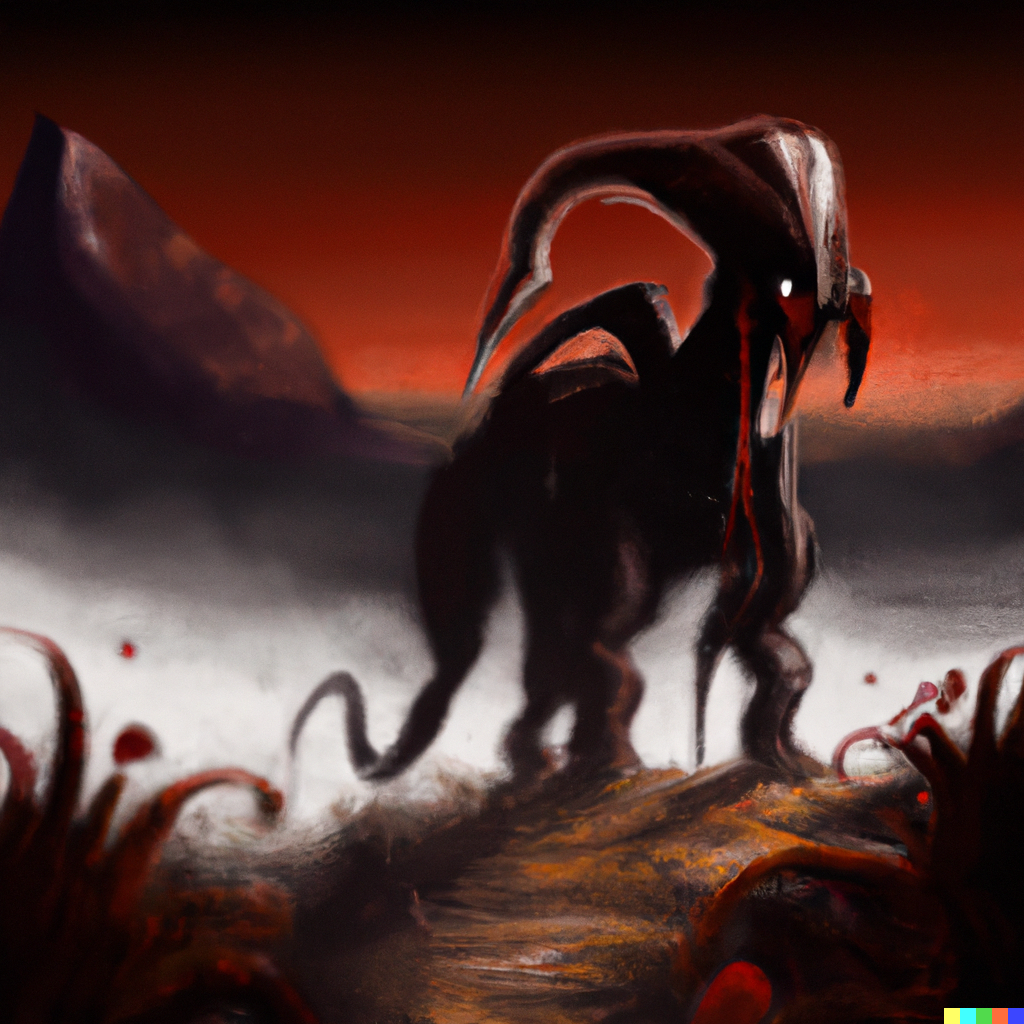
The Old Ones are a group of utterly inimical Beings that seem to have little relationship to the natural order of things.
Near them, the laws of Nature and Magic become warped and hostile to anything nearby, which are often twisted to accommodate this outre existence.
They often enter or leave Mundus during Autumnset, when paths to The Shadowfell lie open.
Other races also arrive via The Shadowfell.
Population
The peoples of Mundus are often categorized by Magi as Barbaria and Populi.
Barbaria live a nomad existence, following (and sometimes tending) the vast herds which provide sustenance and shelter.
Populi live in fixed shelters (e.g. the great Mines) or roving techno-magical constructions (Urbs and Castelas).
Barbaria
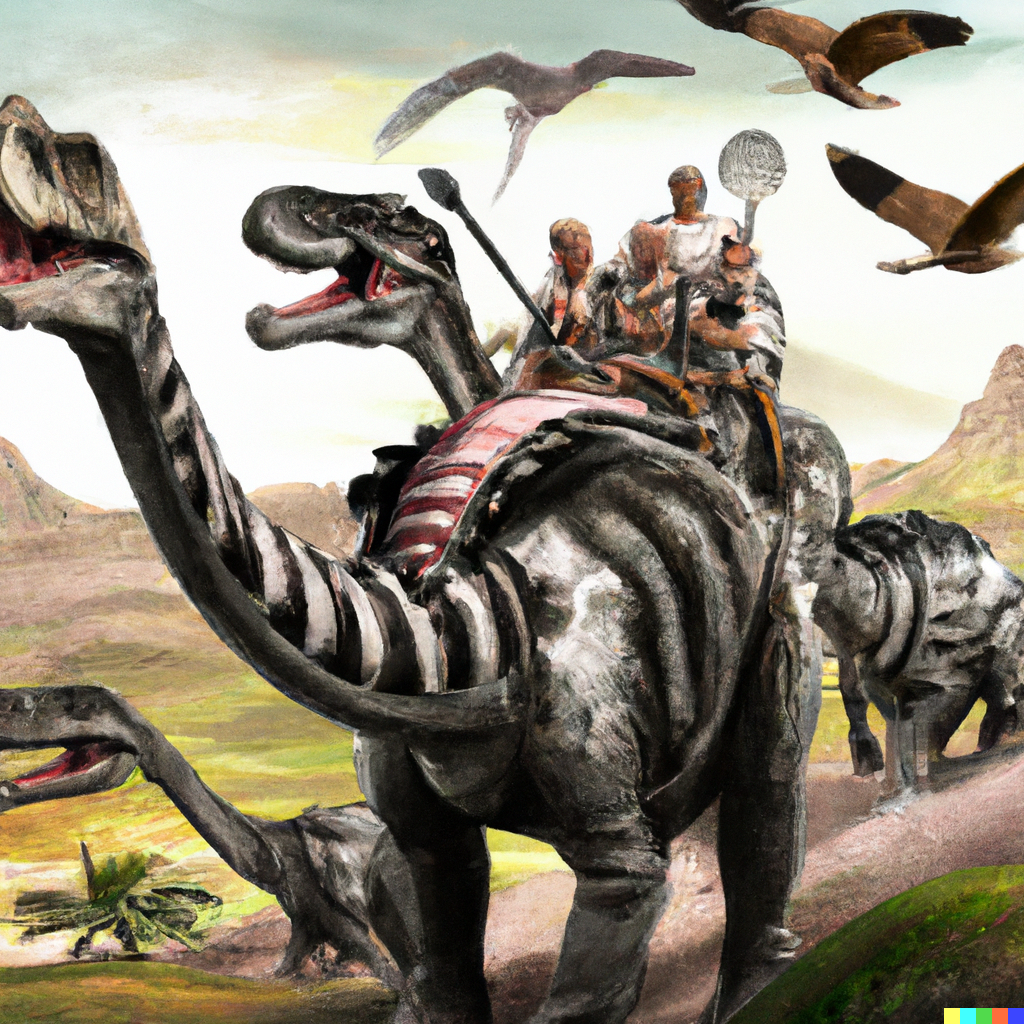
An uncounted variety of intelligent, tool-using races live in or under the skies, seas, and jungles of Mundus. They often war and trade with the Populi.
- Aarakocra
- Aasimar
- Bugbear
- Deep Gnomes
- Duergar
- Firbolg
- Goblin
- Goliath
- Hobgoblin
- Lizardfolk
- Minotaur
- Orc
- Sea Elves
- Shifter
- Tabaxi
Populi
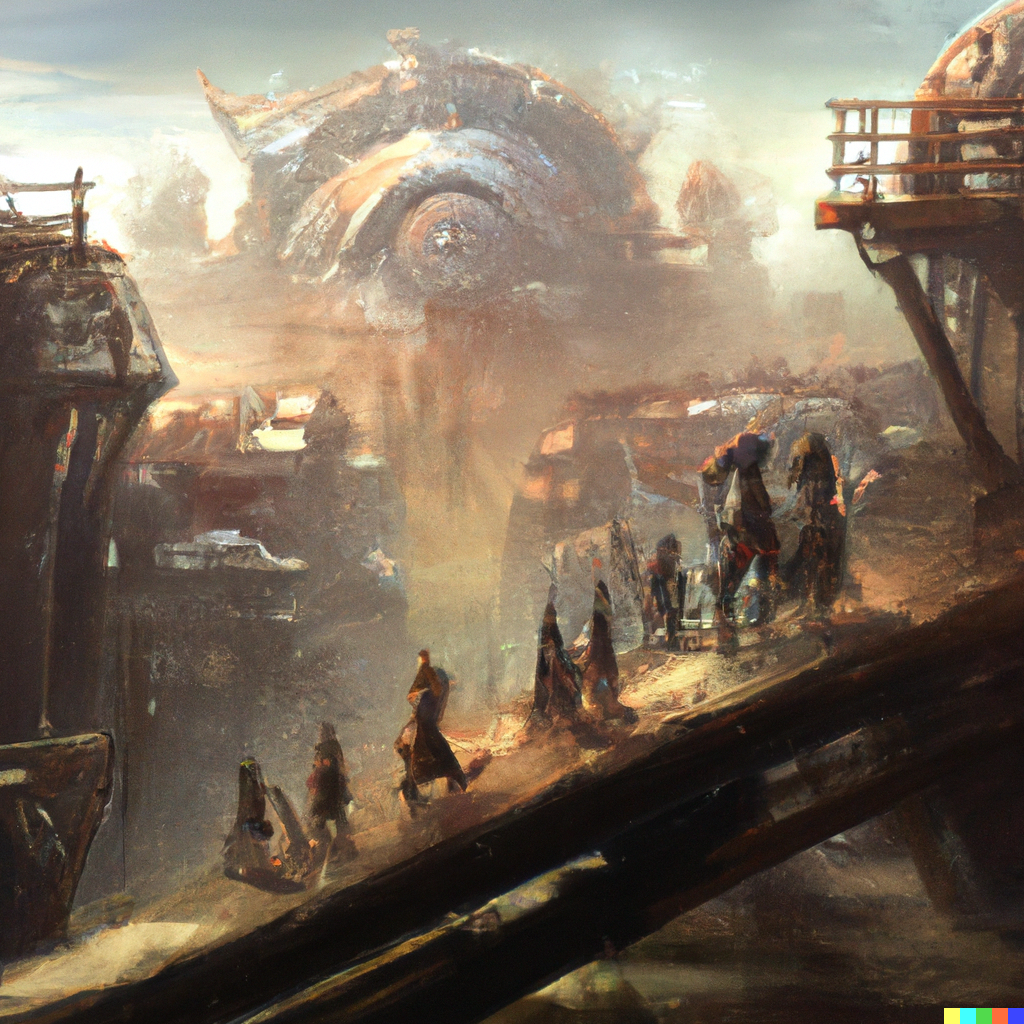
The land and skies are rife with predators natural and otherwise that, in addition to the hazardous weather, dictates that the Populi live in sturdy, defensible, and sometimes mobile Artifacts of unknown design.
The distinction between Barbaria and Populi is often a matter of debate between scholars of the Magisterium, but the following are the most commonly accepted members.
Populi and Habitat
The Populi of Mundus are commonly associated with one of three primary habitat types:
- Castelas — elevated, floating, or artifact-borne strongholds
- Urbs — cities, mobile cities, and surface settlements
- Mines — subterranean, anchored, and extractive settlements
Primary Habitats by Populi
| Populi | Castelas | Urbs | Mines | Primary Habitat |
|---|---|---|---|---|
| Aasimar | ✔︎ | △ | ✖︎ | Castelas |
| Dragonborn | △ | ✔︎ | △ | Urbs |
| Dwarves | ✖︎ | △ | ✔︎ | Mines |
| Elves | ✔︎ | ✖︎ | ✖︎ | Castelas |
| Gnomes | △ | ✔︎ | △ | Urbs |
| Goliaths | ✔︎ | ✖︎ | ✖︎ | Castelas |
| Halflings | △ | ✔︎ | ✖︎ | Urbs |
| Humans | △ | ✔︎ | △ | Urbs |
| Orcs | ✖︎ | △ | ✔︎ | Mines |
| Tieflings | △ | ✔︎ | △ | Urbs |
Legend:
✔︎ = Common / Preferred △ = Present but uncommon ✖︎ = Rare or actively avoided
Habitat Avoidance
- Castelas are generally avoided by Dwarves and Orcs, who favor anchored or defensible terrain, and by Halflings, who prioritize mobility over elevation.
- Urbs are avoided by Elves and Goliaths, who view dense surface cities as ecologically unstable or culturally restrictive. Dwarves maintain only limited trade presence.
- Mines are avoided by Elves, Aasimar, Halflings, and Goliaths, who associate deep excavation with ecological harm, confinement, or Mana opacity.
Aasimar
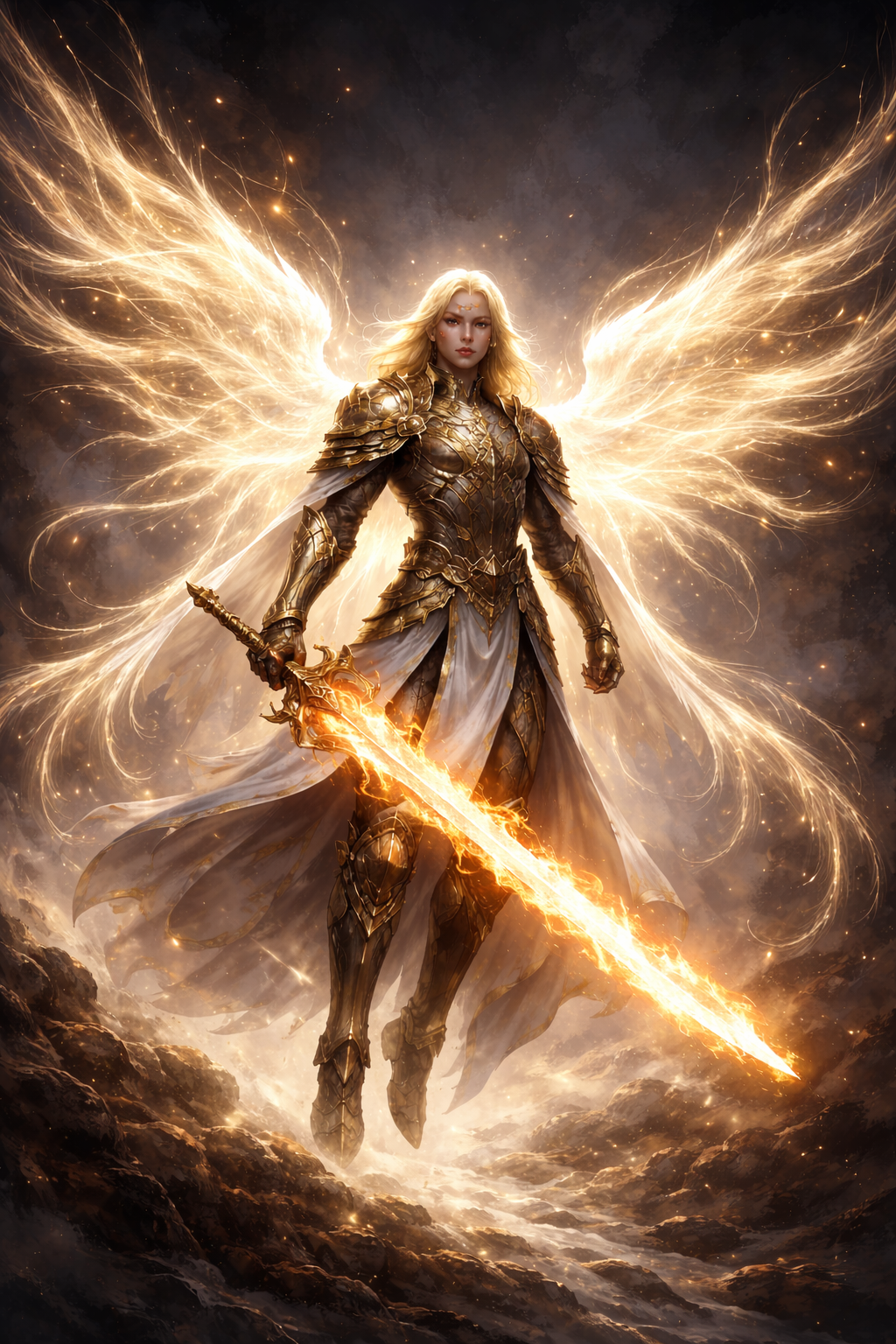
Aasimar are rare among the Populi, marked not by wings or constant radiance, but by an enduring alignment with forces older and larger than mortal societies. They are often mistaken for chosen champions or divine emissaries, yet most Aasimar reject such titles. Their nature is quieter and heavier—less a blessing than a burden carried across generations.
Where others inherit culture, Aasimar inherit orientation.
Origins and Nature
Aasimar do not channel divine will so much as reflect it, imperfectly and at a distance. All Aasimar ultimately derive from a single divine source, though none claim to comprehend His will in full.
They arise most often in lineages that remain unusually stable across upheaval—cultural, ecological, or magical. Long stewardship of critical sites, sustained proximity to powerful Mana flows, or survival through repeated Collapse can all leave such an imprint.
This resonance manifests differently across individuals: heightened perception, unnatural calm amid chaos, or an instinctive pull toward places of structural or moral importance. Many Aasimar recognize their nature only when the world around them begins to fail.
Relationship to Power
Unlike Clerics, Aasimar do not serve through prayer or doctrine. Unlike Sorcerers, they do not generate power from within. Their abilities reflect alignment, not authority or volatility.
In times of stability, Aasimar may seem unremarkable. In times of Ecological Collapse, they become unmistakable.
Their presence often coincides with:
- regions of Mana instability or Mana Burn
- failing Castelas or threatened Urbs
- sites where Blight has crossed from injury into systemic decay
For this reason, some scholars describe Aasimar as symptoms rather than causes.
Aasimar and Habitat
Aasimar are most commonly found in Castelas, especially those anchored to ancient structures or persistent Mana flows. They are also found, less frequently, in marginal Urbs near fault lines of history or belief.
They avoid the Mines, which they describe as spiritually opaque or silent. Prolonged time underground often dulls their perception and causes profound unease.
Few Aasimar remain in any one place for long. When a structure stabilizes—or finally fails—they move on.
Culture and Society
Aasimar do not form nations or lasting institutions of their own. When they gather, it is temporarily: to witness, to judge, or to intervene at critical moments.
Many serve as:
- wardens of ancient sites
- mediators during ecological or political crises
- observers attached to Castelas councils or mobile Urbs leadership
They are often respected, occasionally resented, and rarely understood.
Aasimar in the Modern Age
As Ecological Collapse and Mana Burn grow more common, Aasimar births appear to be increasing—an observation that unsettles both scholars and rulers.
Some interpret this as a sign of impending renewal. Others fear it marks the approach of irreversible failure.
The Aasimar themselves offer no reassurance.
Adventurers and Outcasts
Many Aasimar leave because remaining would require choosing between intervention and complicity. Travel grants distance from expectation—and perspective on a world that no longer behaves as it once did.
They are drawn to companions who adapt quickly, endure hardship, or question inherited purpose.
Perception by Others
To most Populi, Aasimar are unsettling rather than inspiring. They do not promise salvation. They observe, endure, and act only when necessary.
Their most persistent myth describes them not as angels, but as weights upon the world—appearing where balance is strained, and departing once equilibrium is restored or lost.
Whether they represent hope, warning, or inevitability remains an open question.
What is certain is this:
Aasimar appear when the world is being tested.
Dragonborn
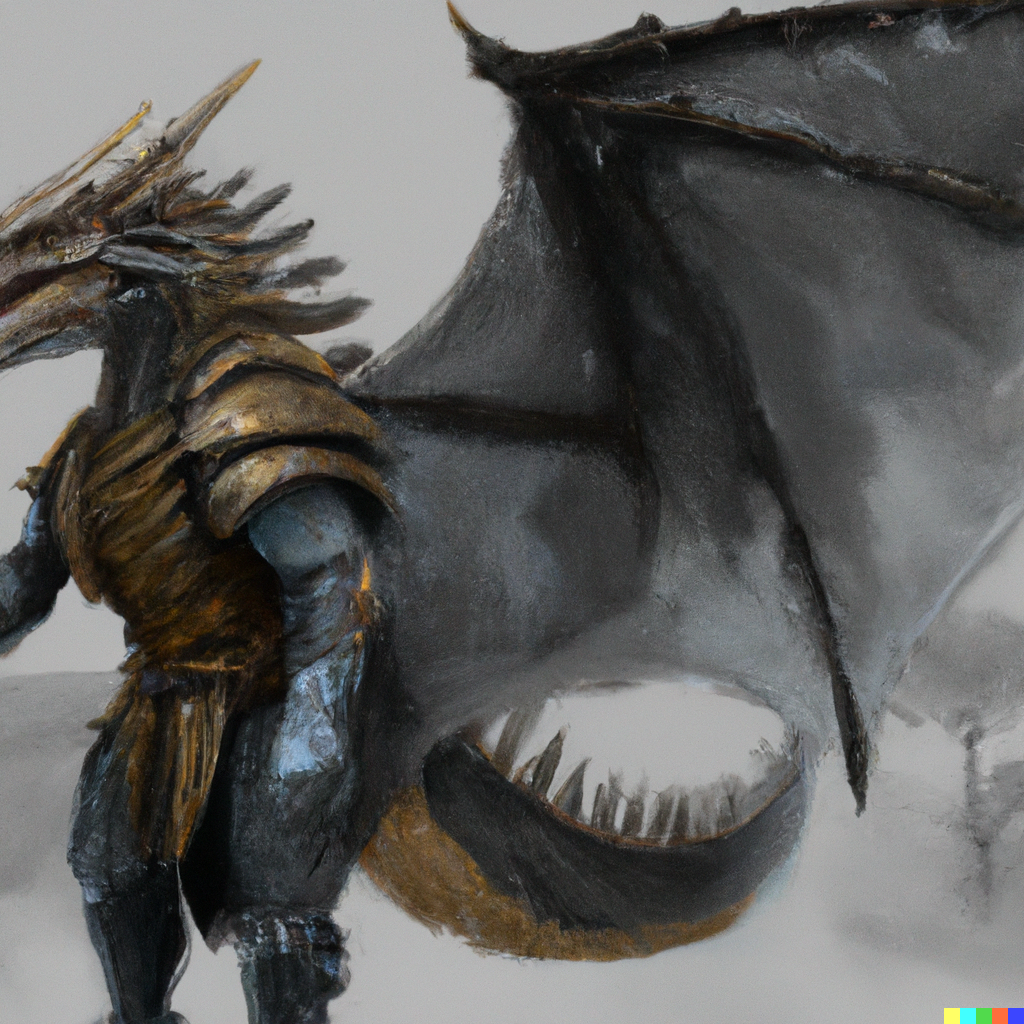
The Dragonborn are a mysterious and sundered people, found living in small conclaves amongst the Elves, Humans, Dwarves, and sometimes Halflings.
Any equipment they have, excepting magic items, must be specially made for their anatomy.
Their relation to the mighty Dracos is a matter of much speculation but little knowledge.
Dwarves
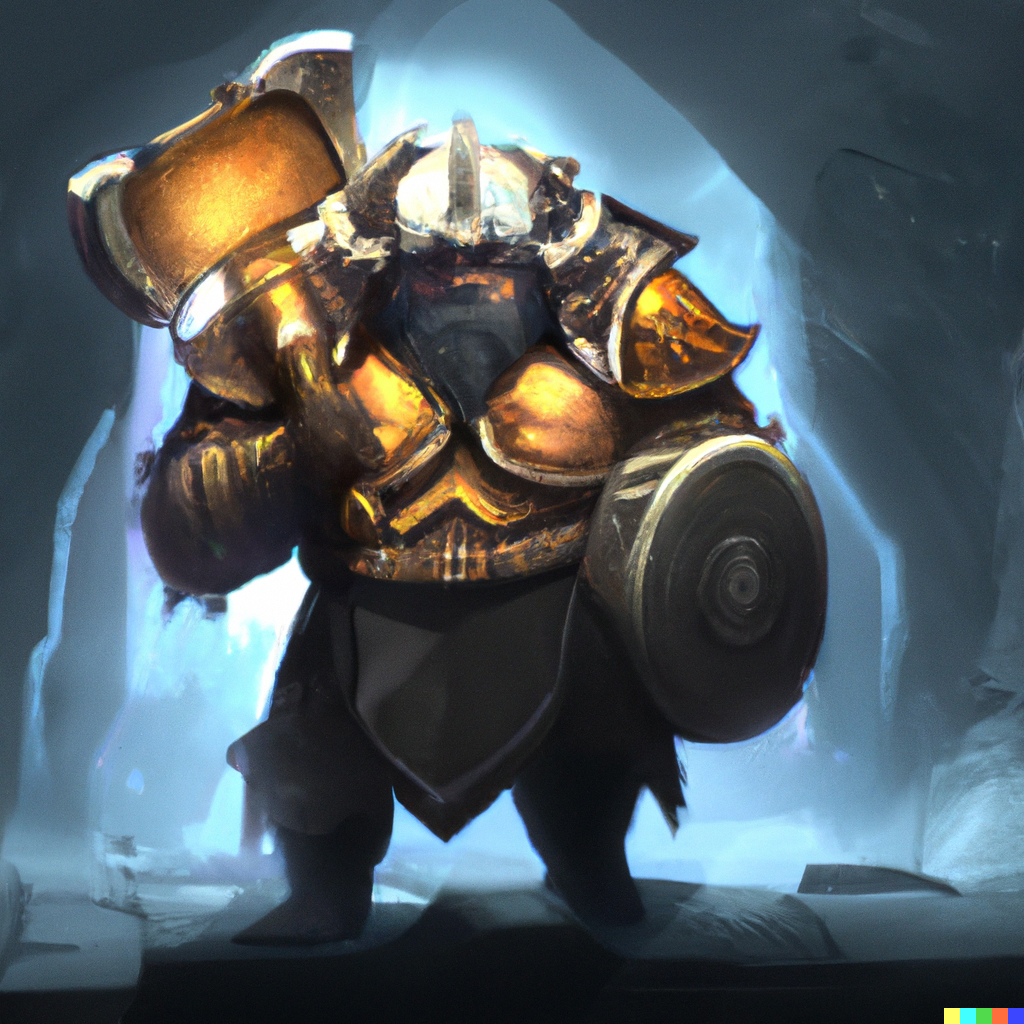
Dwarves live in the tunnels surrounding the vast open Mines, which produce metals and other substances for trade with the Human Urbs and Elven Castelas.
They dislike Magic and are especially resistant to it.
Their capital city is hidden above the clouds in the high peaks of Maxwell.
Elves
The Elves are a long-lived race that consider themselves the masters of Mundus. There are several species of Elves and they seem to be highly adapted to life wherever they find themselves.
-
The Sky Elves commune with the Fey and live in the Castelas. Their great Capital sits aloft over the continent of Aphrodite. They have foldable bat-wings from wrist to ankle with which they can glide great distances, and are resistant to Acid.
-
The Wood Elves live in communities made from the gigantic Sequoias of Ishtar. They guard their forests jealously, and like their Sky Elf cousins, posses gliding membranes. They appear to have lost their resistance to Acid, but are instead resistant to a great many natural toxins.
-
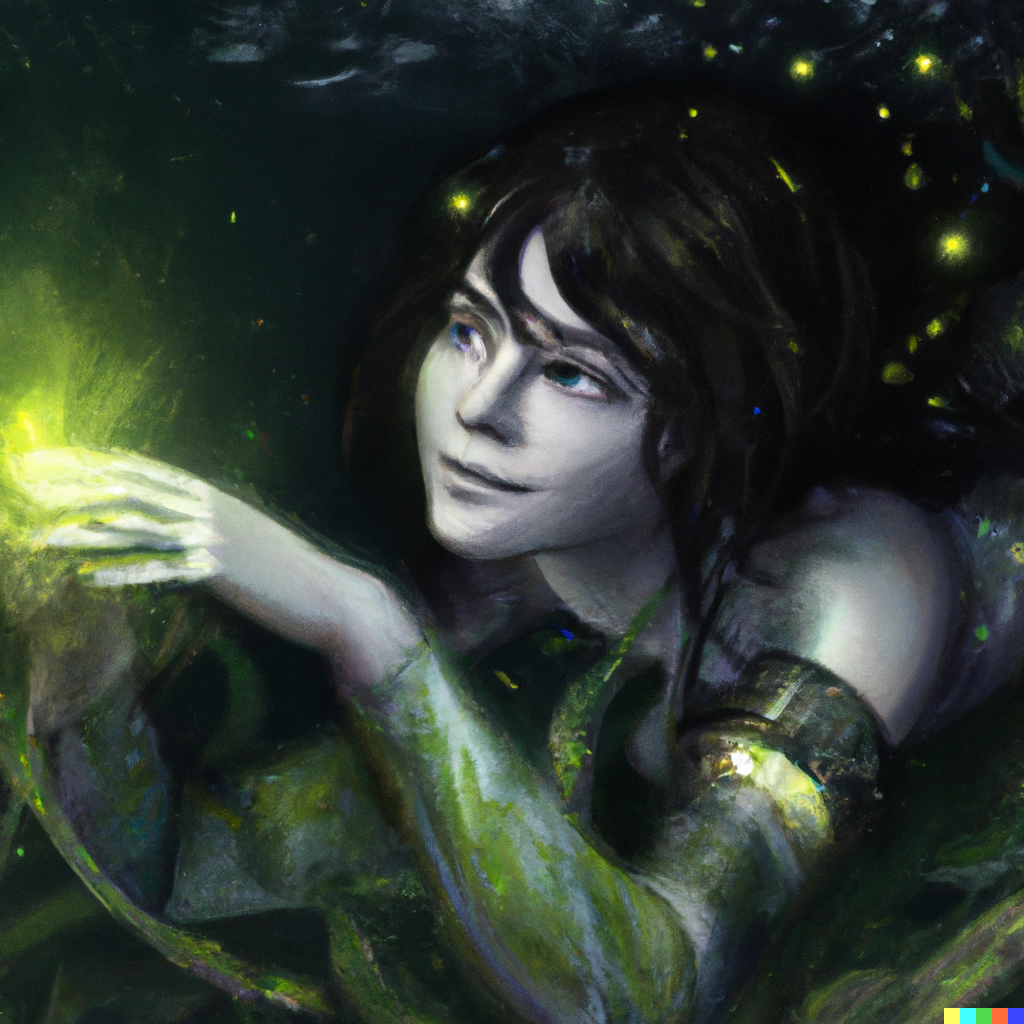
The Sea Elves live in Oceanus and can breathe underwater. Their wings are thicker and allow them to swim effortlessly. They are resistant to Cold.
-
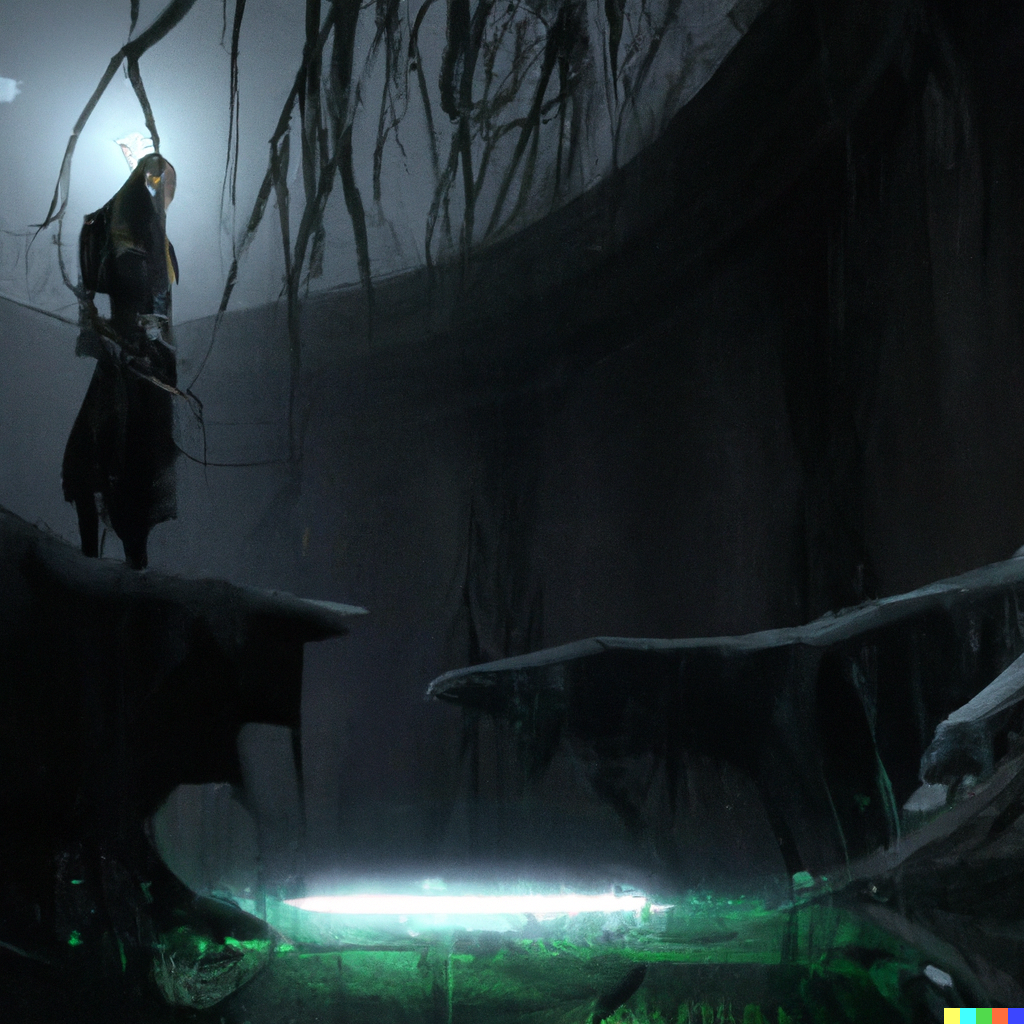
The Dark Elves live deep underground, and are in constant conflict with their other kin. They do not have wings, but can instead produce spiderwebs. They are resistant to the toxins of the Underdark.
Goliaths
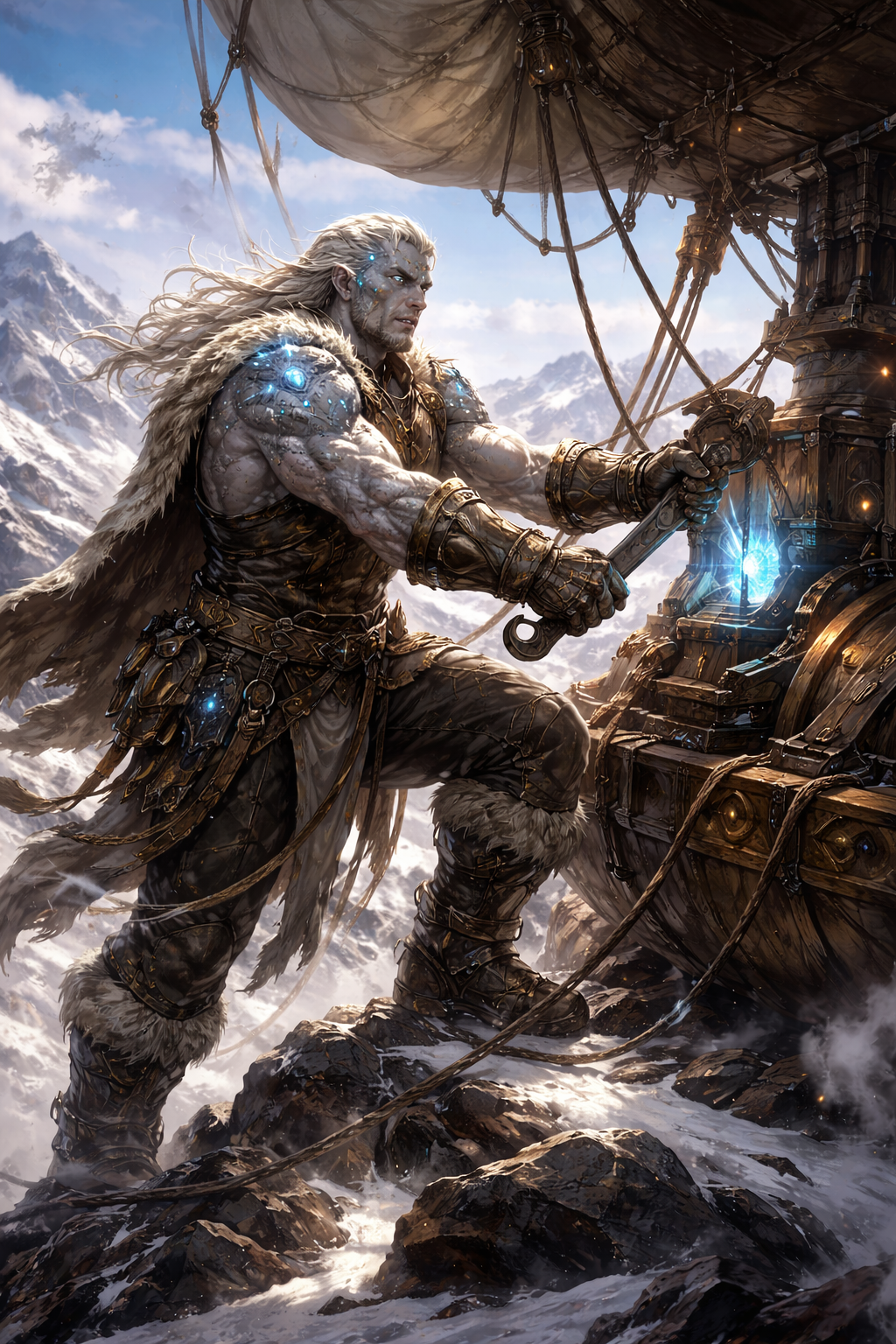
Goliaths are the descendants of the Giants’ enduring presence in the world—not heirs to their authority, but to their exposure. Among the Populi, Goliaths are those most accustomed to living where the forces that shape Mundus are least mediated: high wind, crushing storms, unstable stone, and raw Mana flow.
Where others seek shelter, Goliaths seek contact.
Origins and Giant Lineage
All Goliaths trace their ancestry to one of the great Giant lineages. This inheritance does not grant dominion, but adaptation—each lineage reflecting a way of surviving sustained contact with overwhelming forces.
Common lineages include:
- Storm Lineage — attuned to lightning, wind, and pressure; often found on exposed Castelas or high peaks where the sky bears down on the land.
- Stone Lineage — resilient and unyielding; adapted to faulted plateaus, escarpments, and load-bearing structures.
- Frost Lineage — tempered by cold and scarcity; accustomed to endurance where warmth and certainty are rare.
- Fire Lineage — forged in heat and upheaval; resilient amid volcanic regions, furnaces, and Mana-scarred ground.
- Hill Lineage — adaptable and tireless; thriving where terrain shifts, erodes, or refuses permanence.
These lineages are not cultures so much as responses. A Goliath’s lineage shapes how they endure, not what they rule.
Relationship to Power
Goliaths do not define power as authority, inheritance, or accumulation. To them, power is the ability to remain standing when conditions worsen.
They respect strength that endures, not strength that overwhelms.
This philosophy places Goliaths at odds with rigid hierarchies and unchecked ambition alike. Leadership among Goliaths is practical and conditional, ending when it ceases to serve survival.
In times of Blight or Ecological Collapse, Goliaths often outlast populations that were better protected but less prepared.
Goliaths and Habitat
Goliaths are most commonly found in Castelas and high-altitude regions that functionally resemble them—exposed, elevated, and difficult to access. Many Castelas rely on Goliath communities to maintain outer structures, weather-facing systems, and emergency response during storms or Mana surges.
They avoid dense Urbs, which they find constricting and disorienting, and almost never settle in the Mines. Enclosed environments limit awareness and response—qualities Goliaths consider dangerous.
Culture and Society
Goliath society is organized around small, resilient communities bound by shared trials rather than ancestry alone. Lineage matters, but demonstrated endurance matters more.
Common cultural values include:
- personal accountability
- respect earned through action
- clarity in decision-making
- acceptance of loss without resentment
Competition exists, but it is rarely cruel. Trials are designed to reveal limits, not to destroy those who fail.
Goliaths in the Modern Age
As storms intensify and Castelas face increasing strain, Goliaths have become more visible across Mundus. Their skills are in high demand where infrastructure fails and environments turn hostile.
Some scholars note that Goliaths appear more frequently near regions of Mana instability, though whether this reflects migration, birth, or adaptation remains uncertain.
Adventurers and Pathfinders
Many Goliaths leave their high places not out of restlessness, but necessity. Adventuring offers exposure to unfamiliar challenges and the opportunity to test oneself beyond known limits.
Goliaths often gravitate toward roles involving:
- frontline endurance
- environmental hazard response
- protection during retreat or evacuation
They measure success not by survival alone, but by how many others endure alongside them.
Perception by Others
To other Populi, Goliaths can appear blunt, intimidating, or indifferent. In truth, they are simply unaccustomed to excess explanation or indirect speech.
Their most enduring reputation is that of weathered pillars—figures who remain standing when structures fail and others flee.
What is certain is this:
Goliaths endure where the world itself is breaking.
Halflings
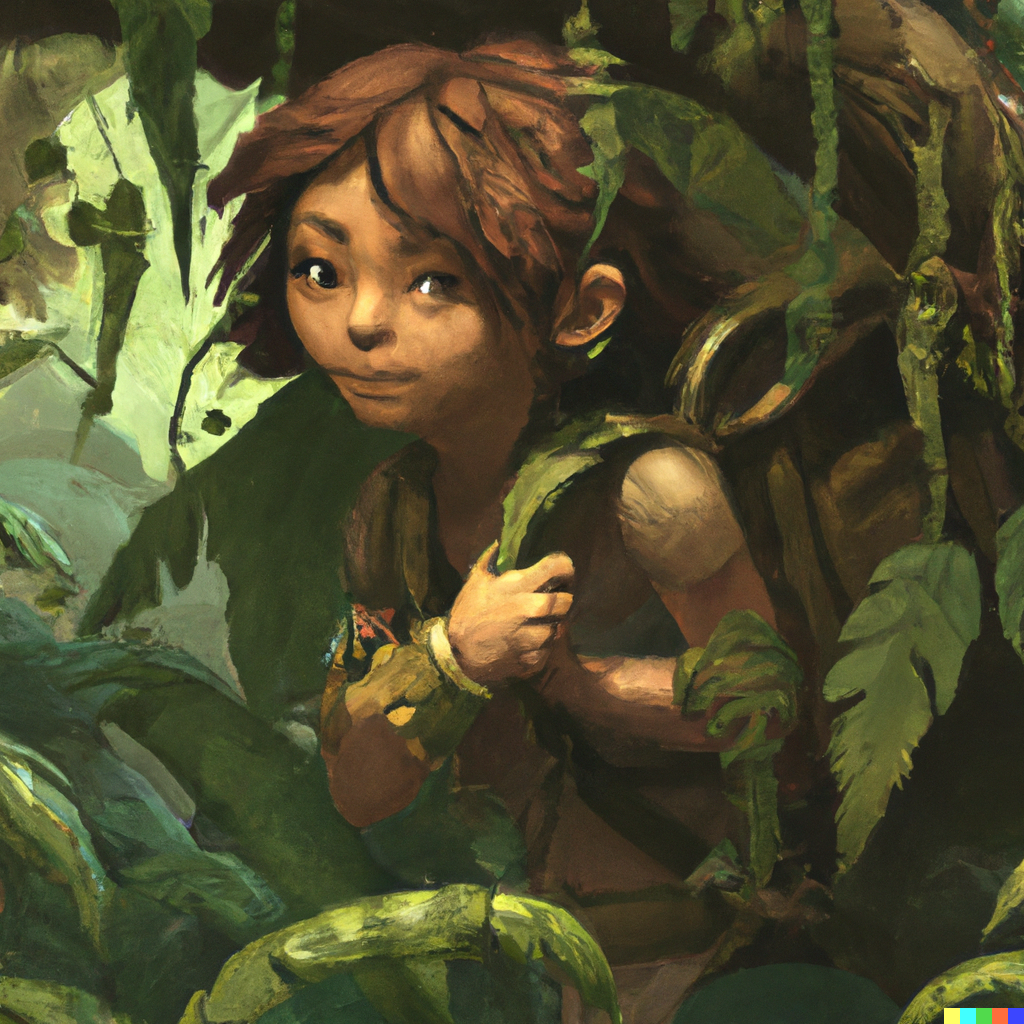
Halflings live in the jungles in cleverly concealed homes and burrows. They have no known Capital.
They spend their whole lives hiding from predators are are quite good at it.
Trade with Halflings is extremely valuable for the exotic flora and fauna they produce with mysterious healing and magical properties.
Humans
Humans come in the widest variety of shapes, colors, and sizes. They tend towards two types:
- Civilized Humans live in the Urbs, ruled by the Magisterium, which communes with their particular Urb and guards their secrets jealously. Each Urb is a society to itself and various Urban Leagues have risen and fallen throughout human history.
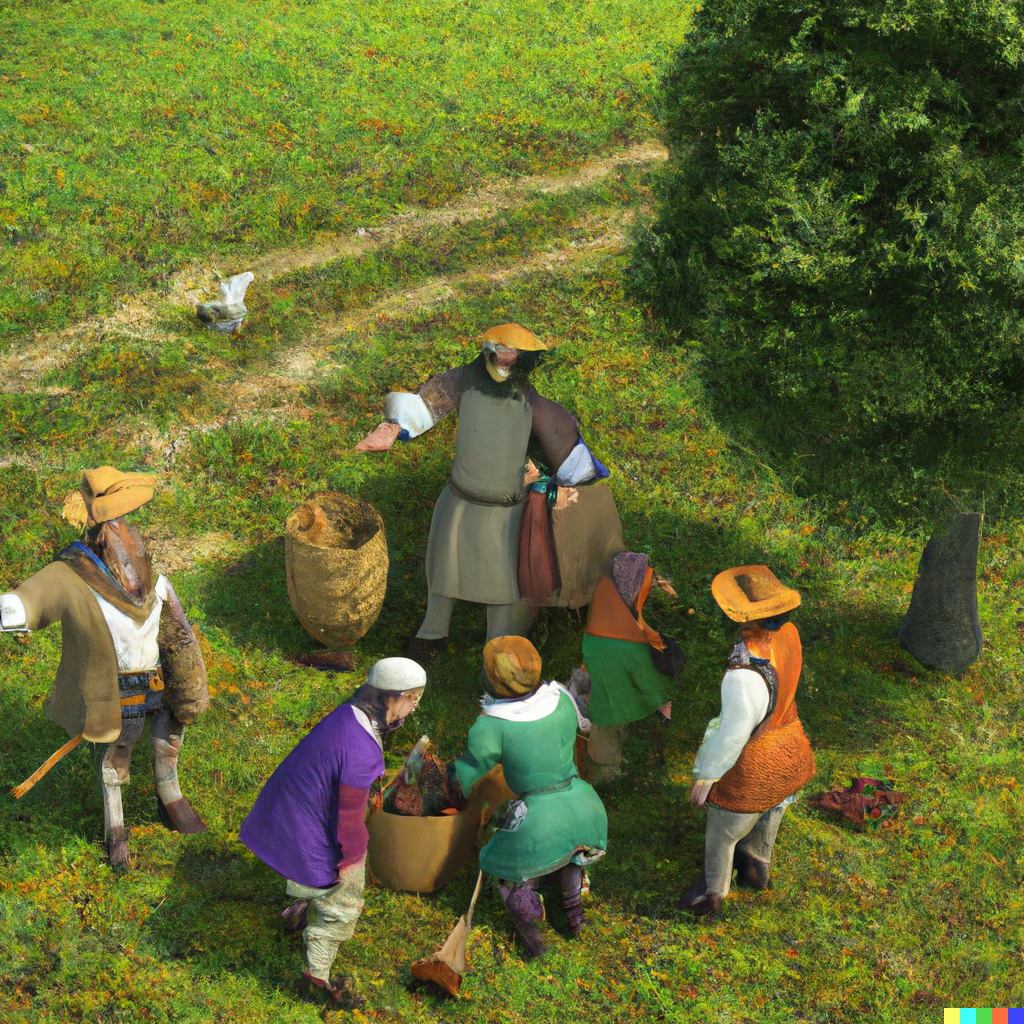
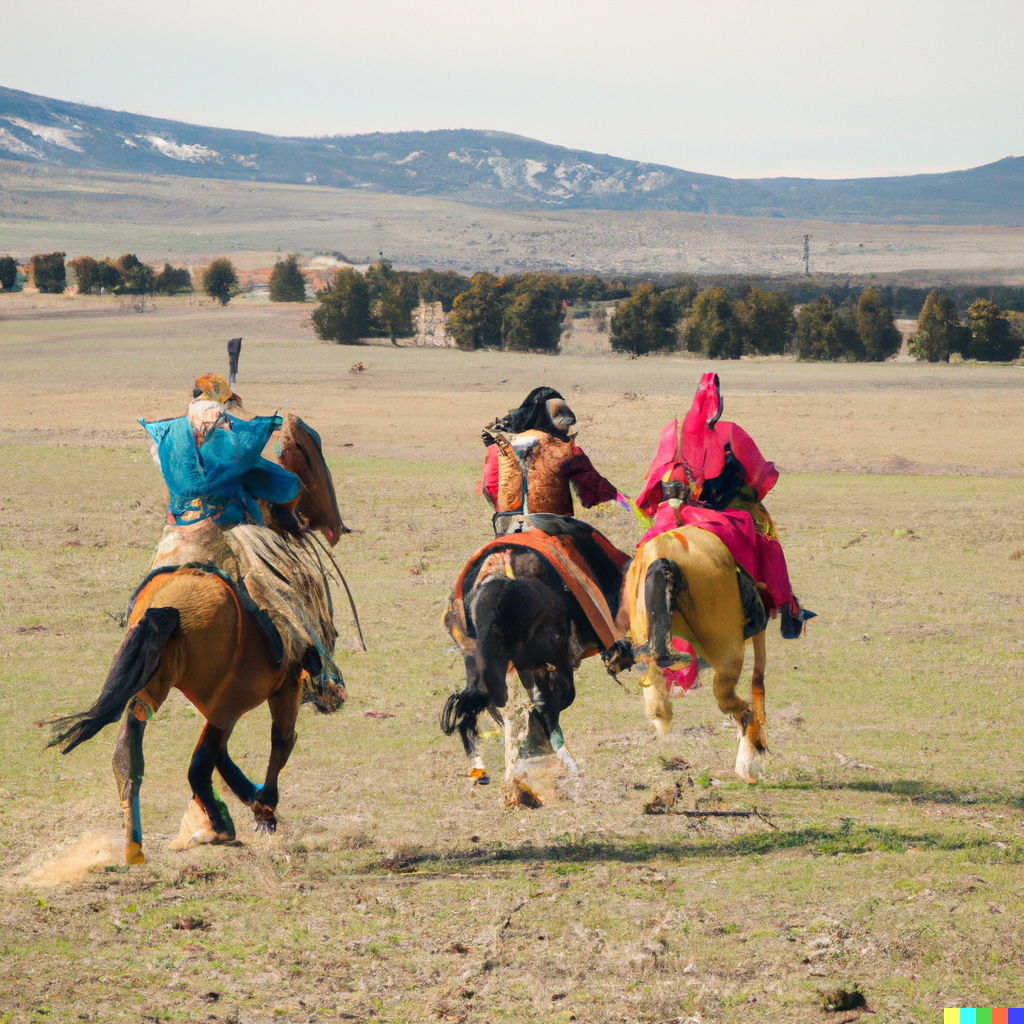
- The Barbarians live on the open plains, tending vast herds on their giant Thunderbeasts. Each tribe is a society unto its own, warring, trading, or both with other tribes and, occasionally, Civilized Humans. They sometimes exchange food and exotic items for Artifacts produced by Civilization.
Gnomes
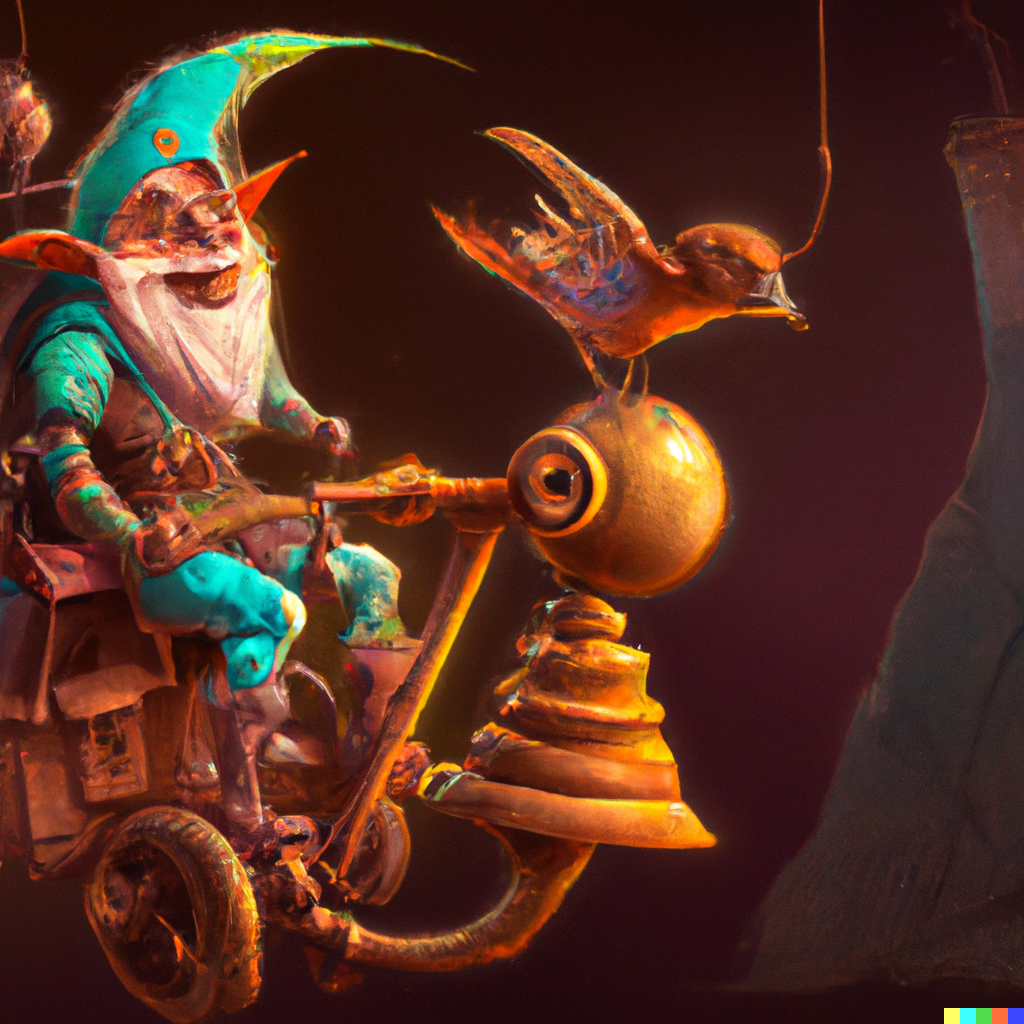
Gnomes often live near the same Mines as the Dwarves.
Unlike the Dwarves, Gnomes have an affinity for magic and are rumored, like the Elves, to be Touched by the Fey.
It is rumored they have their own Capital in Lada.
Orcs
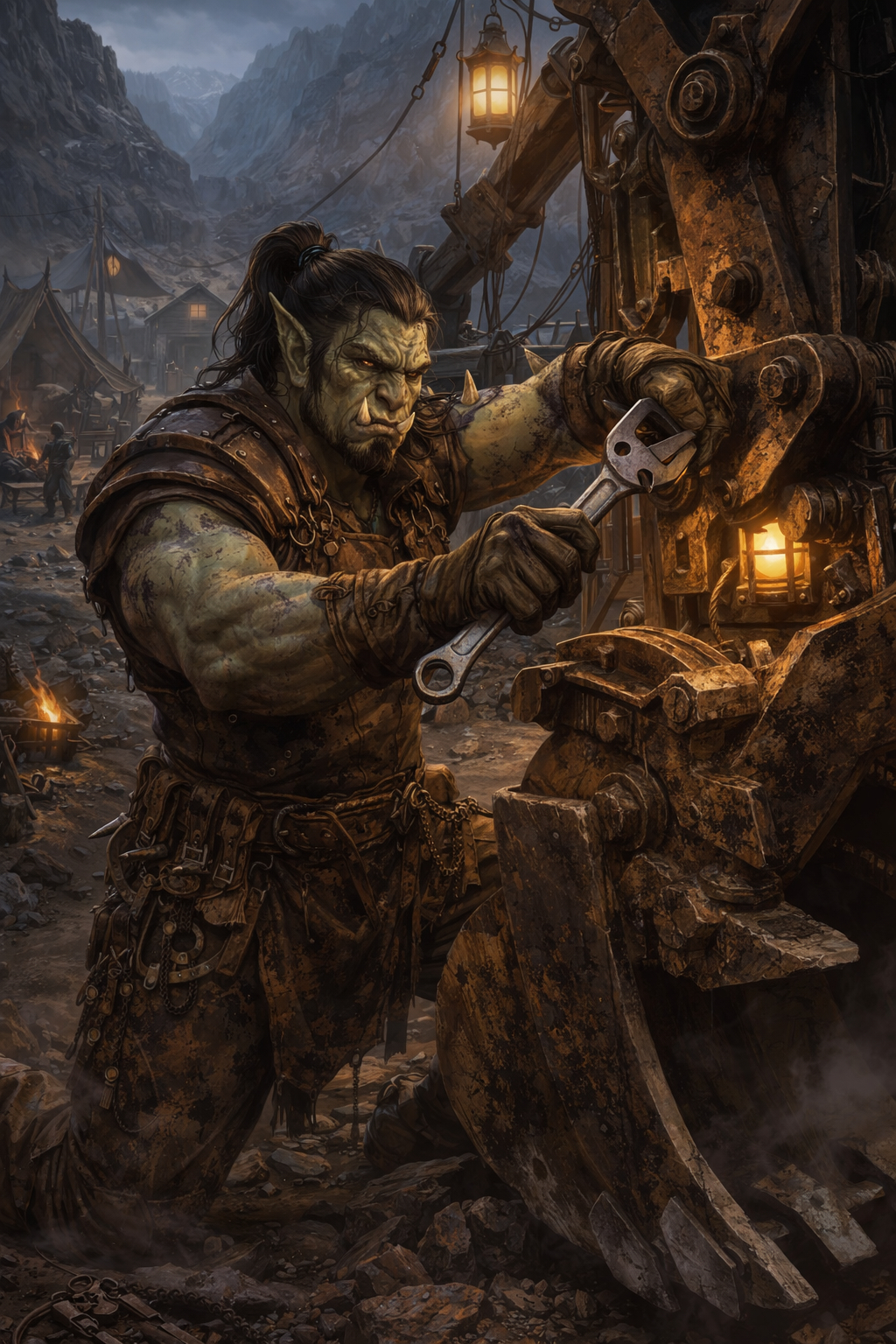
Orcs are a people forged at the margins—where stability thins and survival demands resilience rather than comfort. Among the Populi, Orcs are most often found at the frontiers of habitation, living where Urbs fray, Mines break into open scar, and Blight presses hardest against settled land.
Where others retreat from hardship, Orcs remain.
Origins and Adaptation
Orcs emerge most readily in regions marked by conflict, scarcity, or ecological strain. Their strength, stamina, and adaptability are not marks of savagery, but of selection: traits that persist where conditions refuse to soften.
They are not bound to a single environment. Instead, Orcs adapt quickly to whatever ground they claim—rock, ash, forest edge, or ruined city.
This adaptability has led many scholars to describe Orcs not as a culture of conquest, but as a culture of survival under pressure.
Relationship to Power
Orcs understand power as the ability to endure loss and continue forward.
Authority among Orcs is practical and provisional. Leaders rise because they protect the group, secure resources, or make difficult decisions others avoid. When they fail, they are replaced—sometimes peacefully, sometimes not.
Orcs respect strength that serves survival, not domination for its own sake.
In regions afflicted by Blight or Ecological Collapse, Orc communities often persist long after other settlements have failed.
Orcs and Habitat
Orcs are most commonly found near the boundaries between Urbs and Mines—in quarry-towns, frontier camps, ruined districts, and temporary strongholds built from scavenged material.
They rarely inhabit Castelas, which they view as inaccessible, inflexible, and detached from the realities of survival. Elevated isolation offers little advantage when resources must be defended directly.
Orc settlements are often temporary by design, intended to be abandoned when conditions worsen beyond recovery.
Culture and Society
Orc society emphasizes cohesion under strain. Loyalty is earned through shared hardship rather than blood alone.
Common cultural values include:
- resilience over comfort
- honesty over diplomacy
- adaptability over tradition
- protection of the vulnerable within the group
Violence is not glorified, but neither is it avoided when survival is at stake.
Orcs in the Modern Age
As Mana Burn and ecological instability become more widespread, Orc populations have increased in visibility across Mundus. Some interpret this as expansion; others recognize it as persistence.
Orcs are often the last to abandon failing regions—and the first to return when others consider them lost.
Adventurers and Frontliners
Many Orc adventurers leave their communities not out of ambition, but necessity. Travel offers access to resources, alliances, and knowledge that can be brought back to those still holding the line.
Orcs commonly excel in roles involving:
- frontline defense
- holding ground under pressure
- recovery and rebuilding after collapse
They judge success not by victory, but by what remains standing afterward.
Perception by Others
To other Populi, Orcs are frequently mischaracterized as aggressive or uncivilized. In truth, their directness reflects environments where ambiguity is costly.
Among those who live near the edges of collapse, Orcs are often respected as keepers of the last ground—the ones who endure when others withdraw.
What is certain is this:
Orcs remain where survival itself is contested.
Tieflings
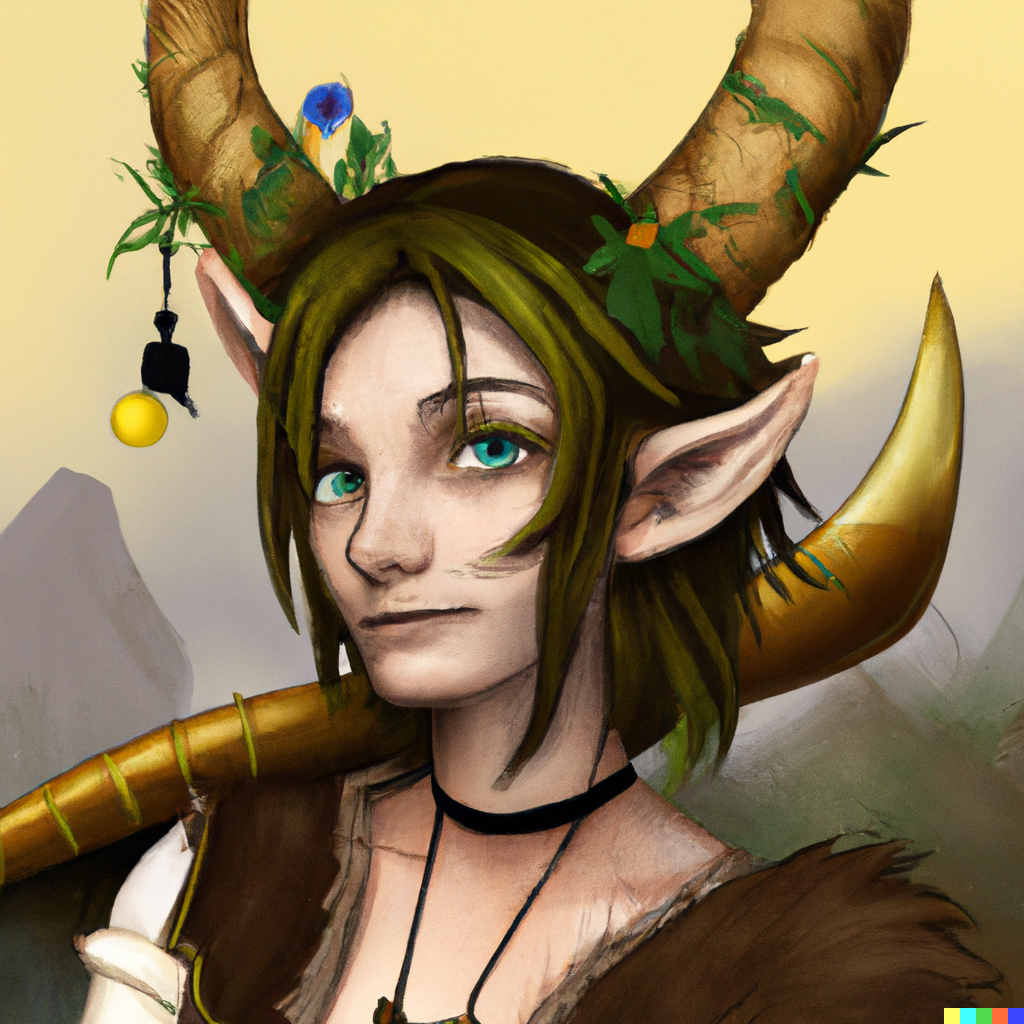
Tieflings are people shaped by fracture rather than alignment. Where Aasimar reflect a distant divine order, Tieflings bear the marks of disruption—heritage altered by contact with forces that warped, inverted, or scarred what once was whole.
They are not born from evil intent, nor do they share a common origin. What unites Tieflings is not ancestry, but consequence.
Origins and Fracture
In Mundus Atrox, Tieflings arise when bloodlines pass through regions of prolonged instability: places marked by Blight, repeated Mana Burn, planar thinning, or the collapse of long-held structures—ecological, social, or spiritual.
Some Tieflings descend from families that survived catastrophe. Others emerge where communities endured generations under strain. In all cases, the transformation reflects exposure, not choice.
Where Aasimar inherit orientation toward divine order, Tieflings inherit the memory of deviation from it.
Relationship to Power
Tieflings do not channel power through worship or lineage alone. Their abilities manifest as controlled instability—expressions shaped by what has been broken and then endured.
They often display:
- unusual resistances or tolerances
- powers that flare under stress rather than calm
- instincts attuned to unstable environments
This makes Tieflings unusually capable in regions others abandon, but also marks them as unpredictable in times of peace.
Tieflings and Habitat
Tieflings are most commonly found in Urbs, particularly in lower districts, ruins reclaimed for habitation, or neighborhoods built atop unstable Mana flows. They are also present near the edges of Mines where excavation has thinned the world’s fabric.
They are rarely found in Castelas. Elevated strongholds tend to reject prolonged instability, and Tieflings often report discomfort or outright exclusion in such places.
Culture and Community
Tieflings rarely form large, unified societies. Instead, they gather in small, adaptive communities bound by shared experience rather than tradition.
Common cultural traits include:
- mutual protection over hierarchy
- pragmatism over ideology
- identity shaped by action rather than origin
- skepticism toward inherited authority
Trust is earned slowly, but once given is fiercely maintained.
Tieflings in the Modern Age
As Ecological Collapse accelerates and Mana Burn becomes more common, Tieflings are appearing with greater frequency across Mundus. Some scholars believe this reflects widening instability rather than population growth.
In failing regions, Tieflings are often among the first to adapt—and the last to leave.
Adventurers and Survivors
Many Tieflings become adventurers because remaining would mean stagnation or erasure. Travel offers opportunity, leverage, and the chance to define oneself beyond inherited marks.
Tieflings excel in roles involving:
- exploration of unstable zones
- negotiation across social boundaries
- survival in environments others consider uninhabitable
They measure success not by purity or redemption, but by persistence.
Perception by Others
To many Populi, Tieflings remain unsettling—reminders that the world can change people without their consent. Suspicion lingers even where laws protect them.
Among those who live near Blight, collapse, or social fracture, Tieflings are often respected as proof that survival does not require perfection.
What is certain is this:
Tieflings endure where order has failed—and continue forward nonetheless.
Civilization
Civilization on Mundus is situated in the Dwarven Mines, Human Urbs, and Elven Castelas.
The Halfling communities and Wood Elven forests are also considered as part of the Civilized world, although they are extremely difficult to find even with an explicit invitation.
Castelas
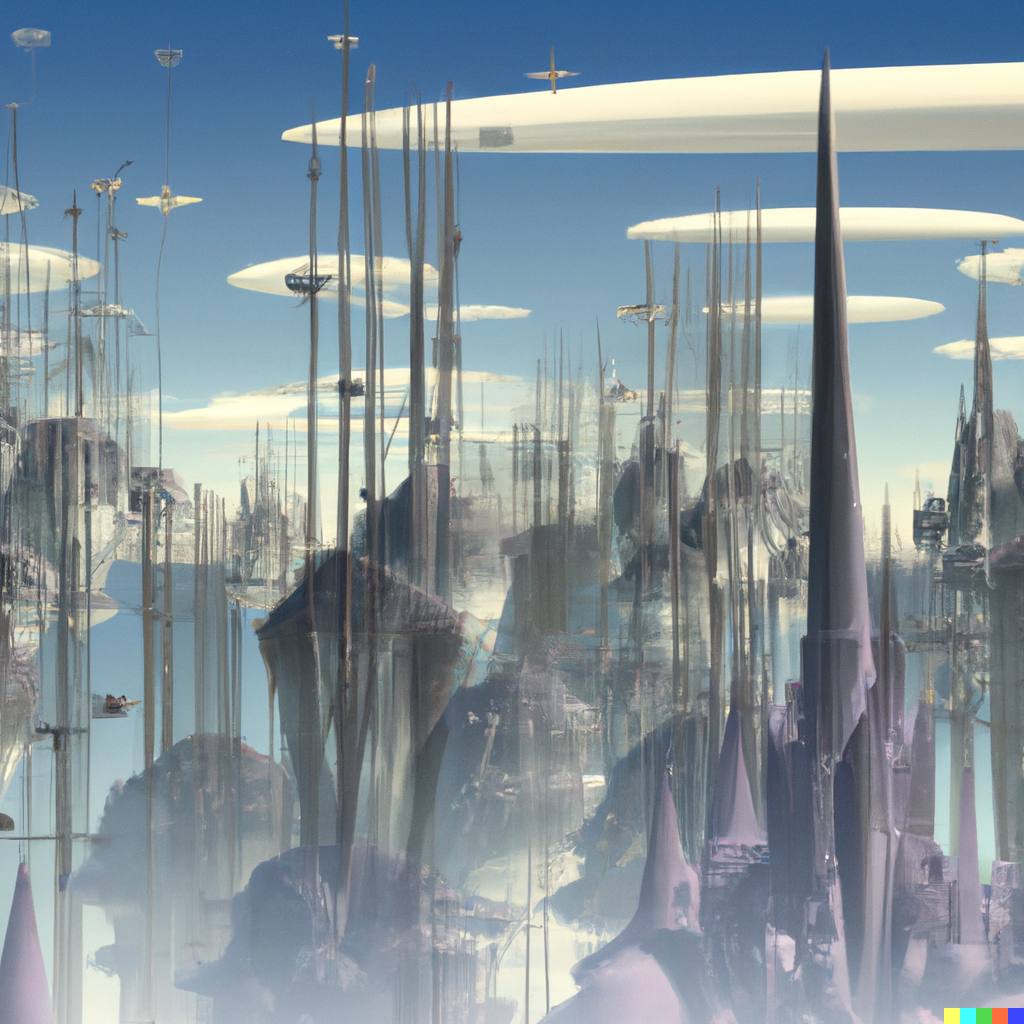
Artifacts that are vast flying cities of metal which often follow the Perpetual Spring.
Sky Elves can glide the winds, but use Airships to travel long distances.
Humans and other races can often be found in the Castelas, but almost never in the higher levels reserved for the Nobility.
Mines
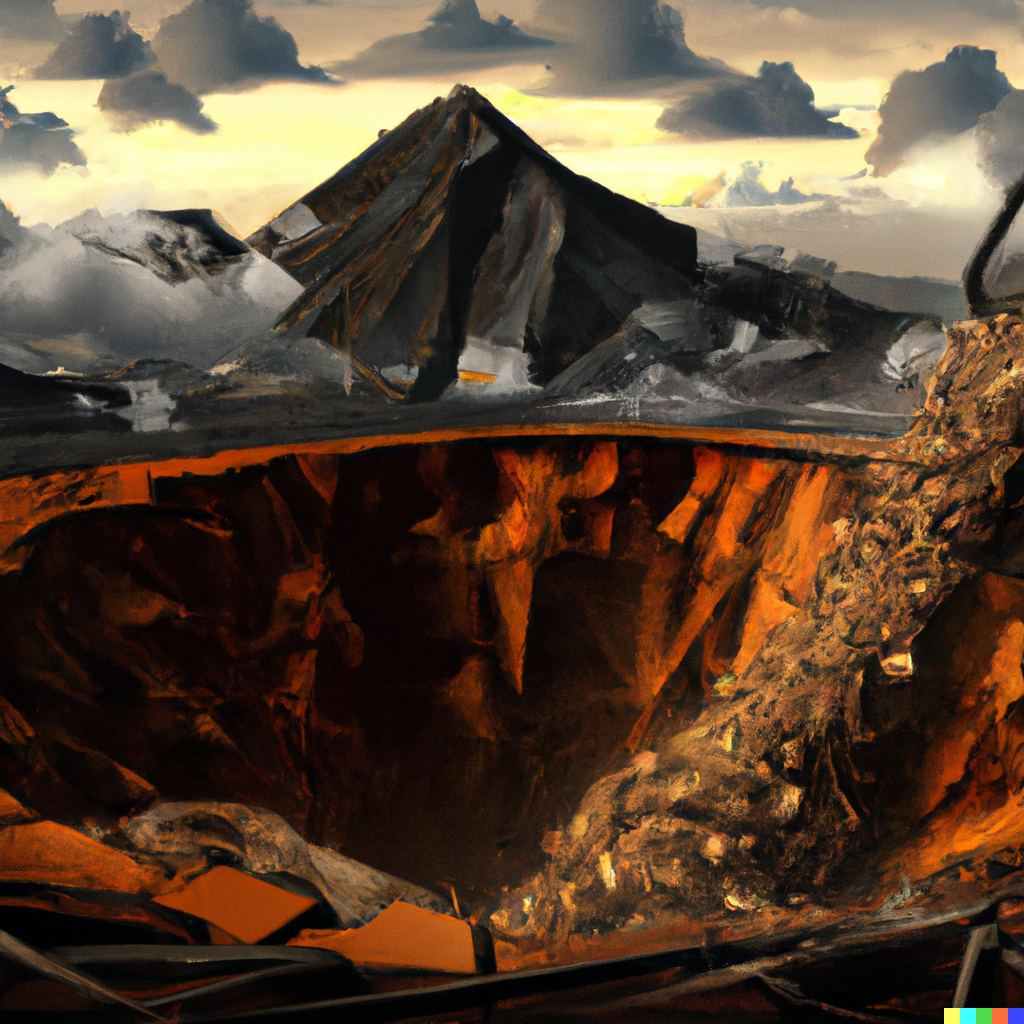
The surface of Mundus is dotted with enormous, open-air mines miles across and many more deep.
Gigantic tracks have ground out all flora surrounding these vast pits, and many Urbs make yearly voyages.
Sometimes these Urbs will winter next to the Mine for mutual protection.
Urbs
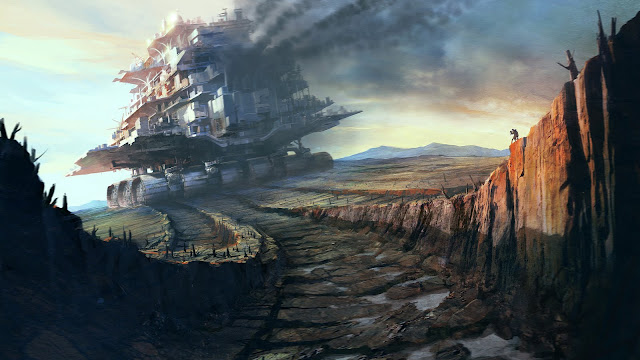
Gigantic cities of metal which rove the land, and sometimes Oceanus, the Urbs ingest great quantities of ore and other substances, often from Mines, which they can manufacture into Artifacts.
These manufacturing processes seem intrinsic to the Urb itself; the Artificers Guild seem mainly to ensure continued functionality of the machinery.
Some whisper the Artificers themselves have little understanding of the inner workings of the Urbs, but such rumors are firmly put down by the Crusaders of the Magisterium.
Urbs range in size from merely gigantic rovers to mile-long structures with as many as seven tiers. The typical Urb moves at a stately walking pace, and the clanking of their gigantic treads can be heard for miles.
Inhabitants usually live in sturdy wooden and stone structures that are built upon the metal foundations of the Urb, which produces anchor points upon demand by an Artificer. Some say these Urban folk have a near-permanent deafened condition.
Neverwinter
- Population: 500,000, predominantly Human
- Government: House of Lords
- Defense: The Ten Thousand Crusaders of Light form a permanent standing army, supplemented by the Templar. The Armada is a fleet of Airships and Hippogriff Riders that patrol the skies, supplemented by the Reserve of chartered, privately-owned Airships that can be called up on emergency. The Magisterium provides the Arcane Legion.
- Commerce: Agriculture, Magic, Manufacturing, Technology, Trade, Travel
Description
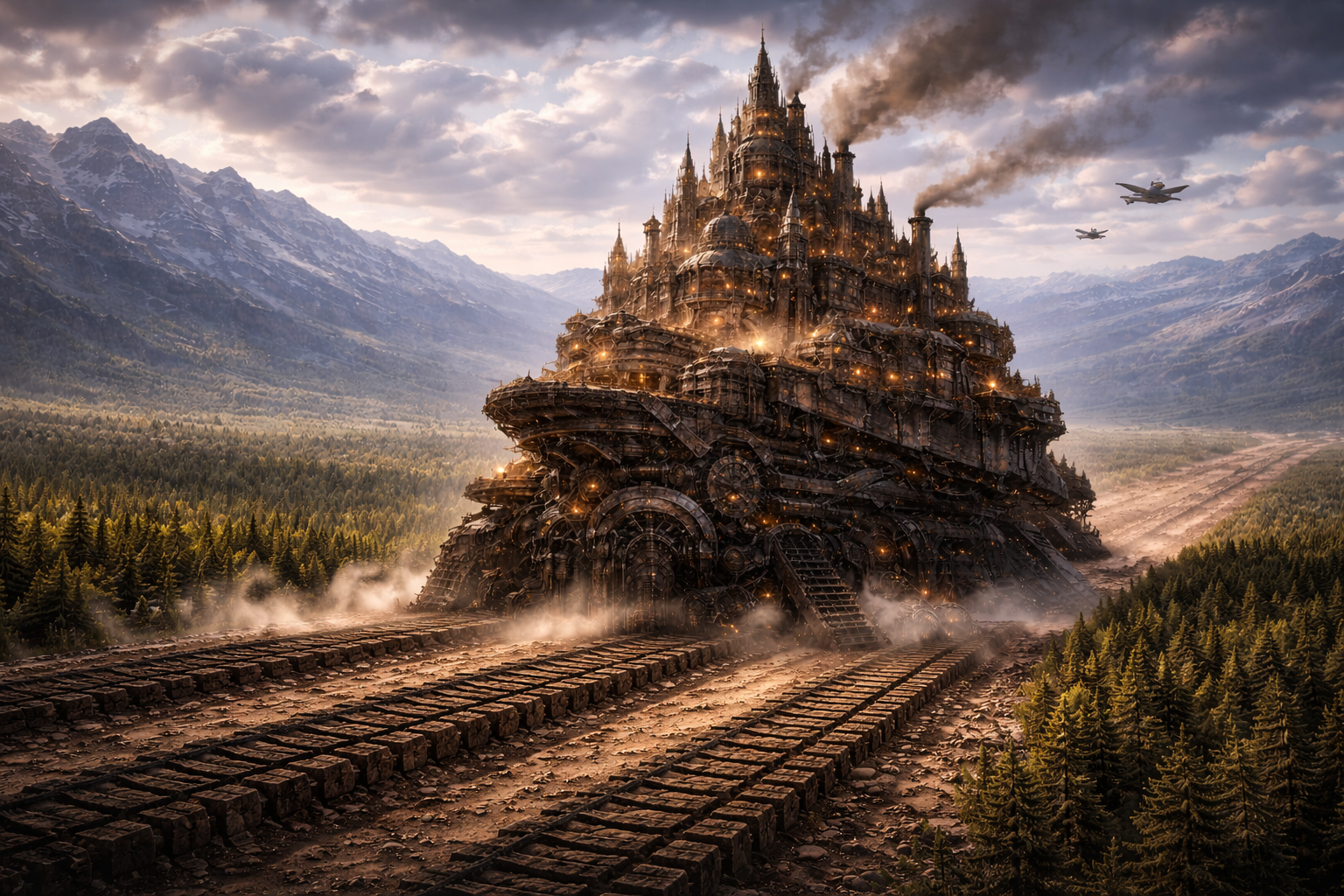
Neverwinter is a formidable Urb, its silhouette stretching far into the horizon, testament to the ingenuity and resilience of the Urban League. A vast metropolis built on eight levels and powered by colossal wheels and caterpillar tracks, it is on the move during Winternight, searching for resources and evading the hordes that gather in darkness.
Constructed in ascending tiers, each is an intricate network of streets, factories, warehouses, and residences. The bottom tiers are primarily devoted to resource processing and manufacturing, a hectic maelstrom of machines overseen by the Artificer’s Guild, while the upper tiers house the living quarters, businesses, and governmental institutions. In this complex ecology, larger structures devour smaller ones, mimicking the city’s overall predatory nature.
The top of Neverwinter is dominated by St. Paul’s Cathedral, a beacon of hope and solace amidst the sometimes grim Adamantium and steel. The Cathedral is an architectural marvel, the apex of the city, its spires rising dramatically towards the sky. Its gothic design is a stark contrast to the industrial aesthetic of the city, with ornate stonework and beautiful stained glass windows adding an element of charm.
Atop the cathedral sits the Arclight, the city’s most revered Techno-Magical achievement. This Artifact emits soothing light that eradicates Aberrations, Fiends, and Undead while freezing Shapeshifters and casting even magical darkness. The Arclight’s bright halo is more than just a strong defense; it has become an integral part of Neverwinter’s identity. The warm, omnipresent light illuminates nearly every corner of the city and is visible from leagues away, a lighthouse guiding lost souls and a constant reminder of the city’s vigilance against the darkness.
Despite its unending hunt for resources and grim necessity of survival, Neverwinter remains a beacon of civilization and hope. The Arclight, its glow reflecting off St. George’s Cathedral, is a testament to the Populi’s capacity for resilience and innovation amidst the challenging, dystopian reality of the world.
Government
Neverwinter is governed by the House of Lords:
- Lords Temporal, 13 Peers who are appointed by and include the ranking Peer Marchioness Lyanna Alagondar.
- Lords Spiritual, 13 members of the Apostolic See who are appointed by and include the Archbishop Antonio Jesus Ramirez Villarreal of the Diocese of The Sword Coast.
- Lords Magical, 12 members of the Magisterium and 1 from the Artificer’s Guild who are appointed by and include Chancellor Rhalyf Liabanise.
Military
- The Commandant of the Crusaders and the First Air Lord of the Armada answer to the Lords Temporal.
Layout
The city is organized into levels, each with a distinct purpose and function. Generally speaking, inhabitants do not tend to cross levels, and each level is a self-contained ecosystem. Each level contains structures that are multi-story, and the city is built on a series of wheels and caterpillar tracks that allow it to move. The city is powered by a combination of magic and technology, and the Artificer’s Guild is responsible for maintaining the city’s infrastructure.
Level 0
- Locomotion
- Mining
- Ore Processing
This level is the foundation of the city, and is primarily devoted to resource processing and manufacturing. It is a hectic maelstrom of constructs and machines overseen by the Artificer’s Guild, and is the most dangerous level of the city.
Level 1
- Foundries
- Manufacturing
This level contains foundries and manufacturing facilities, and is where raw materials are processed into usable goods. Much of the labor is performed by Constructs, with unskilled laborers providing support.
Level 2
- Farms
- Franciscan Abbey
- Labor Housing
- Warehouses
This level contains the city’s food production facilities, as well as warehouses where food and finished goods are stored. Farmers, laborers, and unskilled workers live here along with their families. The Franciscan Order provides services to the inhabitants of this level.
Level 3
- Businesses
- Guild Housing
- Markets
Level 3 is one of the few open levels of the city, being primarily devoted to businesses and commercial areas. Residents and outsiders flock here to buy and sell goods, and it is a bustling, vibrant level.
Level 4
- Artificers Labs
- Engineering
This level contains the city’s power generation facilities and other vital techno-magical machinery. It is primarily inhabited by Artificer’s Guild members and their families, and access is generally restricted.
Level 5
- The Armory
- The General Curia
- Noble Quarters
The Armory is a massive structure that houses the city’s standing army, the Ten Thousand Crusaders of Light. Various Nobles also live on here, and access is generally restricted. The General Curia is located here, which is the headquarters of the Jesuit Order.
Level 6
- Hangars
- The Pilot House
- The Sky Docks
- Templar Barracks
The Pilot House of Neverwinter is in the forward quarter of this level, from where Neverwinter is piloted. The Sky Docks are located in the aft quarter, and are where the city’s Airships and Hippogriff Riders are housed in the vast Hangars. The Templar Barracks are located in the middle of the level, and are where the city’s Templar are housed.
Level 7
- The Arclight
- The Ledger of the Peerage
- The Magisterium
- The Marchioness’ Palace
- St. Paul’s Cathedral
This level contains the city’s most important institutions, including the Ledger of the Peerage, the Magisterium, and the Marchioness’ Palace.
St. Paul’s Cathedral dominates the skyline, with the famous Hanging Gardens in the courtyard, all under the Blessed Light of the Arclight.
“Topside”, as it is often called, is open to all citizens, and is the most beautiful and peaceful level of the city.
Silos
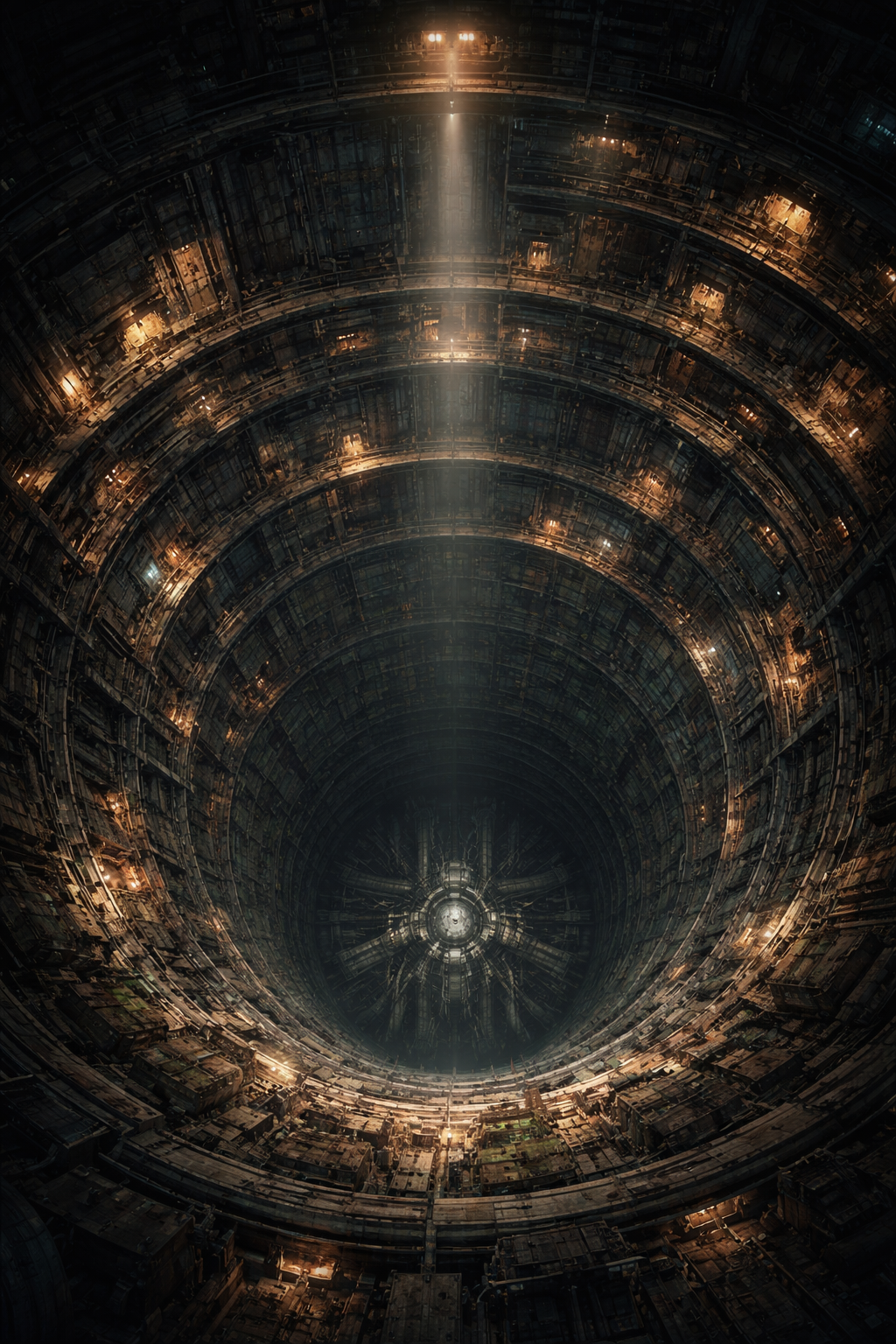
Silos are among the deepest and most enigmatic structures found beneath the surface of Mundus. They are not cities, nor fortresses, nor mines—yet they have served as all three at different points in history.
To most of the Populi, Silos are ancient shelters whose origins are lost to time. To scholars, they are inconvenient mysteries: too consistent to be natural, too uniform to be the work of mortal hands, and too resilient to have been intended merely as refuge.
Form and Structure
All Silos, regardless of size or location, follow the same underlying design.
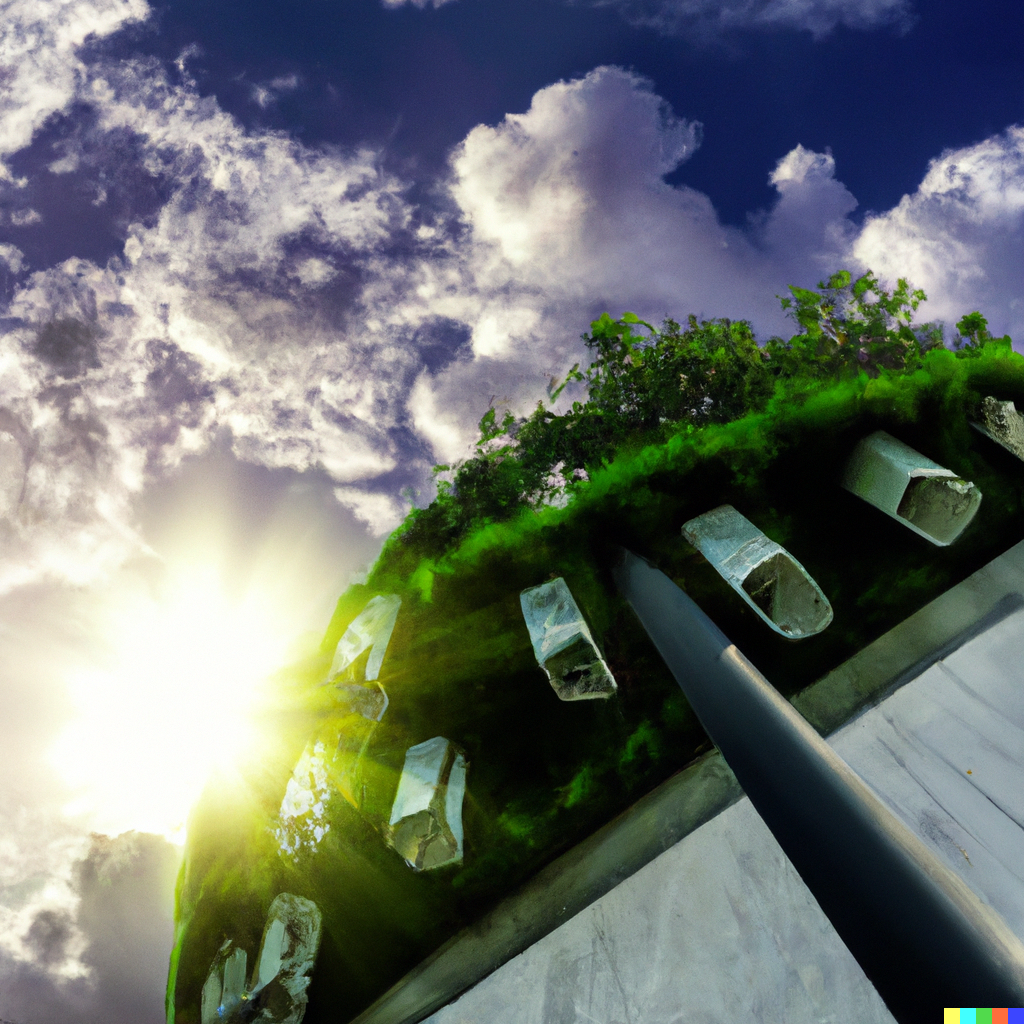
At their core is a vast vertical shaft, extending six or more stories downward into the earth. Around this central void are ringed levels—walkways, chambers, and access corridors arranged with precise regularity. The shaft itself is smooth, reinforced, and unnervingly straight, as though it were never meant to be traversed by living beings at all.
At the lowest levels lie colossal, dormant mechanisms embedded into the structure of the Silo itself. Their purpose is unknown. Their scale alone places them beyond the ability of nearly all living Artificers to repair, alter, or even fully dismantle.
These lower chambers are often sealed, avoided, or repurposed only at their edges.
Repurposing and Survival
During Winternight—the winter season, when night stretches long and the dead rise in uncountable numbers—Silos became sanctuaries. Communities learned—often through loss—that no surface settlement could endure such cycles without retreat, and so they fled downward, sealing themselves behind stone and steel they did not understand but trusted to endure.
What saved them was not the Silo’s original purpose, but its resilience.
In the centuries since, Populi have adapted Silos for survival. The lowest accessible levels are typically converted to support life:
- machines that draw water from air and stone
- chambers that generate heat, power, and steady light
- vaults for grain cultivated during Summerday, the long season of light, and processed below
- workshops and maintenance halls
These systems are maintained primarily by Dwarves, Gnomes, and—where available—Artificers, though even they admit much of the underlying structure operates by principles no longer understood.
The deeper machinery remains unused, its function guessed at but never confirmed.
Communities of the Deep
Over time, permanent settlements have grown around Silos. Farming communities cultivate the surrounding land during the warmer seasons, storing surplus within the Silo itself. As Winternight approaches each cycle, the population withdraws below, sealing the upper access points until the long night passes.
Such communities value stability over mobility. Unlike the roaming Urbs or the ever-delving Mines, Silo settlements endure by remaining where they are—anchored to something that has already proven it can survive catastrophe.
Many Populi consider Silos unsettling, yet dependable. They are places of last refuge, not ambition.
Echoes of the Past
Records of the ancient war that devastated many Silos are fragmentary. Some structures show signs of immense internal damage—walls scorched, chambers collapsed, entire lower levels fused or shattered. Others remain inexplicably intact.
That all Silos share the same design has led to uncomfortable questions.
Why were so many built?
Why were they aimed skyward?
And what enemy required such preparation?
No consensus exists.
Most prefer not to speculate.
Silos in the Present Age
As Blight spreads and Ecological Collapse worsens, interest in Silos has renewed. Some see them as the safest future for rural Populi. Others fear that relying too heavily on structures whose true purpose is unknown invites disaster.
What is undeniable is this:
Silos were built to endure the end of something.
Whether that end has already come—or is yet to arrive—remains an open question.
Artifacts
A great variety of Artifacts can be found on Mundus. The most well-known include:
- The Arclight
- Baba Yaga’s Hut
- The Black Cauldron
- The Book of Exalted Deeds
- The Book of Vile Deeds
- Chaos Edge
- Maxwell’s Forge
- Mournblade
- The Oracle Stones
- The Orbs of Dragonkind
- The Sky Tower of Ovda
- The Smiting Hammer
- Spellbreaker
- Stonehenge
- The Vortex Cube
Less-famous artifacts abound and are in use by the heroes, villains, and leaders in the various societies.
The Arclight
Neverwinter earns its name from this source of eternal illumination. Regardless of the time or season, the city is always bathed in an artificial yet comforting daylight. The city’s residents, working tirelessly within its confines, live in perpetual daytime, giving the city an unusual rhythm and tempo that sets it apart from its counterparts.
Stonehenge
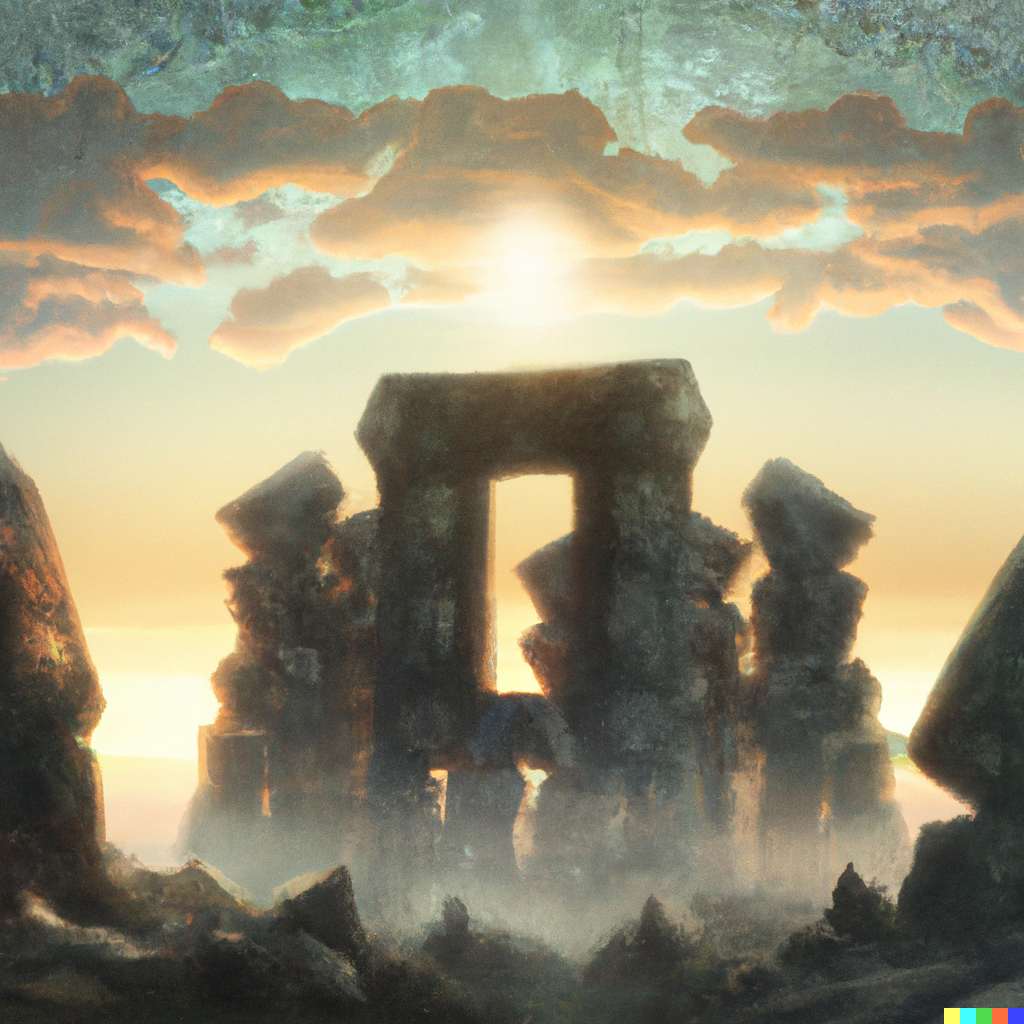
Amidst the rolling hills of green,
Where ancient mysteries lie unseen,
Stands a circle of stones so grand,
A monument of an unknown hand.Stonehenge, they call it, a wonder of old,
A place where stories and legends unfold,
Whispers of magic, of gods and kings,
Of druids, and rituals, and sacred things.In the hours of Springrise, a new life begins,
As nature awakens from her winterly sins,
And Stonehenge, too, seems to come alive,
As if a resurrection of times gone by.The sun rises high, and the air is crisp,
The stones stand tall, as if in a mystic tryst,
The morning dew glistens on the green,
As if a sign of a sacred dream.Amidst this magic, a sense of hope,
Of new beginnings, a way to cope,
As if the stones themselves proclaim,
The promise of life, the end of the game.So, on this cycle of resurrection and spring,
Let us gather at Stonehenge and sing,
Songs of joy, of hope, and of love,
And let the stones bless us from above.
Blight and Collapse
Magic reshapes the world as well as those who wield it. In Mundus Atrox, excessive or reckless use of Mana does not vanish harmlessly—it damages the living systems through which Mana flows. This damage progresses through three recognizable stages: Blight, Corruption, and Ecological Collapse.
These states describe the condition of a region, not an individual creature.
Ecological Integrity
Every region has an Ecological Integrity Level (EIL) representing the health of its living systems and how Mana interacts with them:
- Intact (EIL 3): A balanced, self-sustaining ecosystem. Mana flows cleanly through living systems with no distortion.
- Blighted (EIL 2): Ecological injury is present, but underlying natural patterns remain intact. This state corresponds to Blight.
- Corrupted (EIL 1): The ecosystem’s rules have been rewritten. Life persists in altered, unstable forms. This state corresponds to Corruption.
- Collapsed (EIL 0): The living system has failed entirely. Mana no longer mediates through nature. This state corresponds to Ecological Collapse.
At Intact (EIL 3), Druids are supported by a healthy living system:
- Druids have advantage on saves to avoid Mana Burn.
- Druidic rituals are more efficient and harmonious, often requiring less time, fewer components, or causing no additional ecological strain at the GM’s discretion.
Most settled lands exist at Blighted (EIL 2). Ancient or carefully protected wilderness may be Intact (EIL 3). Wastelands, cursed regions, and dead zones approach Collapsed (EIL 0).
Blight (EIL 2)
Blight is ecological injury: damage to the living system that has not yet rewritten its underlying patterns.
Causes of Blight
- Repeated Mana Burn events (see Consequences of Magic Use)
- Sustained use of high-level Mana magic
- Necromancy and planar contamination
- Industrial exploitation without remediation
- Local catastrophes (fire, poison, magical storms)
Cultural Stabilization in Settled Lands (Bards)
In settled regions, Bards act as cultural stabilizers, reducing the ecological strain normally imposed by dense populations.
Through performance, ritual, oral tradition, and shared identity, Bards help maintain coherent patterns of meaning that Mana can safely flow through. Where Druids preserve natural balance, Bards preserve cultural balance.
In regions with an active Bardic presence:
- Settled lands may remain Blighted (EIL 2) without drifting toward Corruption.
- Narrative signs of Blight manifest as tension, unrest, or decay of morale rather than ecological collapse.
- The loss or silencing of Bardic traditions often precedes sudden ecological decline.
This stabilization does not restore ecosystems to Intact (EIL 3), but it can delay or prevent further degradation.
Bardic stabilization is cultural and communal; it does not shield individual Bards from personal magical strain.
Effects of Blight
- Vegetation shows rot, mutation, or stunted growth
- Wildlife becomes scarce, aggressive, or displaced
- Food and clean water are unreliable
Spellcasting Effects
- Artificers: Unaffected while using inert conduits. Some Artificers exploit degraded environments to harvest unstable materials or excess Mana.
- Bards: Cannot reduce Mana costs or mitigate Mana Burn
- Clerics: Spellcasting functions normally
- Druids: Mana costs increase by 1
- Sorcerers: Some bloodlines resonate with Blight; such Sorcerers may experience narrative advantages or reduced strain at the GM’s discretion.
Blight is reversible if addressed.
Corruption (EIL 1)
Corruption occurs when Blight persists long enough to alter the rules by which the ecosystem operates. Life continues, but no longer behaves naturally.
Causes of Corruption
- Unchecked or prolonged Blight
- Abyssal, Far Realm, or alien influence
- Artifact overuse
- Failed divine interventions
- Repeated large-scale Mana disturbances
Effects of Corruption
- New or twisted species emerge
- Weather cycles destabilize
- Moral and ecological ambiguity: survival comes at a cost
Spellcasting Effects
- Artificers: Mana Batteries and infusions degrade; stored Mana may leak
- Bards: Disadvantage on Mana Burn saves
- Clerics: Divine spells function, but miracles may warp narratively
- Druids: Must succeed on a Constitution save (DC 10 + spell level) to cast spells; failure triggers Mana Burn automatically
- Sorcerers: Certain origins adapt to Corruption, gaining narrative leverage or altered manifestations rather than penalties.
Corruption is difficult to reverse and leaves lasting scars.
Ecological Collapse (EIL 0)
Collapse is the death of an ecosystem. The living field that once mediated Mana has failed entirely.
Causes of Collapse
- Prolonged Corruption
- World-scale magical catastrophes
- Planar incursion or severance
- Industrial replacement of natural systems
Effects of Collapse
- Natural food chains cease to function
- Constructs, undead, and artificial systems thrive
- Weather stagnates or becomes violently unstable
Spellcasting Effects
- Artificers: Spellcasting and devices function normally
- Attuned Casters: Essence-based abilities function normally unless otherwise specified
- Bards: Can cast spells only if another living creature is present; otherwise limited to cantrips. Without living minds to anchor meaning, Bardic magic falters.
- Clerics: Spellcasting functions, but healing effects are halved
- Druids: Cannot cast spells
- Warlocks: Unaffected
Collapse is not easily reversible.
Escalation and Drift
At major narrative milestones, the DM may evaluate a region’s integrity:
- Regions subjected to repeated Mana Burn, artifact overuse, exploitation, or the loss of cultural continuity (such as the destruction of Bardic traditions) may degrade by one EIL step.
- Regions actively tended by Druids, restored through ritual, or relieved of corruption sources may recover one EIL step.
This progression should occur slowly and narratively, not as moment-to-moment bookkeeping.
Ecological Scars
When a region recovers from Corruption or Collapse, it often bears a Scar:
- Altered climate or terrain
- New endemic species
- Lingering magical phenomena
- Cultural or spiritual taboos
Scars are permanent reminders of past damage and serve as story hooks rather than penalties.
Design Note (For the GM)
Blight and Collapse are not punishments. Ecological Integrity Level (EIL) is the authoritative mechanical expression of Blight, Corruption, and Collapse. They are consequences that make magic a world-shaping force. Use them to:
- Encourage restraint and planning
- Give Druids narrative authority
- Make artifacts feel dangerous
- Allow the world to remember player choices
Warlocks are generally unaffected by changes in Ecological Integrity, as their power bypasses regional Mana mediation entirely.
Magic does not simply fade in Mundus Atrox. It teaches the land how to break.
Starting
Here is some information to help you create a character for play in Mundus.
We will be using the materials from the D&D Adventurers League. The following is a summary; see the Player’s Guide for more details.
Step 0: Choose Your Campaign
This one is easy, we’re playing in Mundus.
Step 1: Choose a Species or Lineage
A rather large list of playable races are available, generally grouped into Barbaria, Fey, Old Ones, and Populi, though some Dragon and Giant lineages exist.
Step 2: Choose a Background
Choose a background that reflects who your character was before adventuring. Backgrounds provide skills, proficiencies, starting equipment, and an Origin Feat under the 2024 rules. Origin Feats represent foundational training or experience and are chosen as part of your background, not your class.
Step 3: Choose a Class
Available classes are mostly standard, with the addition of the Gunslinger and Artificer. You may also wish to review the Class Summary to understand combat roles and primary attributes.
- No multi-classing allowed
Step 4: Determine Ability Scores
- Standard set (15, 14, 13, 12, 10, 9)
There are two additional Ability Scores, Honor and Sanity. They are based off of Charisma and Wisdom respectively, and are thereafter independent. See Mana and Consequences of Magic Use for how spellcasting interacts with rest, exhaustion, and collapse.
Step 5: Describe Your Character
- Alignment: Choose a non-evil alignment.
- Background: Confirm your chosen background. If it does not grant an Origin Feat, you may choose Skilled or Tough.
- Deity: Clerics are members of the Apostolic See.
- Faction: Factions (factions.md) are listed for reference; characters are not required to belong to any faction.
Step 6: Choosing Equipment
Step 7: Come Together
Figure out why your particular group of miscreants form a band. This may be the subject of a Session Zero. This step often benefits from reviewing Factions, Populi, and the current state of Blight and Collapse.
Additional Rules
Timekeeping
Time in Mundus is measured in cycles. Daytime (Summerday) and nighttime (Winternight) each last about 60 cycles. Each cycle includes one Long Rest and two Short Rests.
The transition periods between these seasons are extended twilight cycles: Autumnset (between Summerday and Winternight) and Springrise (between Winternight and Summerday).
- Missing a Long Rest during a cycle causes Exhaustion.
Races
Game statistics for the various races, summarized from the Player’s Handbook, Mordenkainen’s Monsters of the Multiverse, and Eberron: Forge of the Artificer.
| Species | Notable Traits (2024-style summary) |
|---|---|
| Aarakocra | Flight, Talons, Wind affinity |
| Aasimar | Celestial resistance, radiant manifestation, healing light |
| Bugbear | Long-limbed reach, surprise attack, stealth resilience |
| Centaurs | Charge, hooves, equine build |
| Changelings | Shapechanging, adaptable identity |
| Deep Gnomes | Superior darkvision, magic resistance |
| Duergar | Psionic resilience, invisibility/enlargement |
| Dragonborn | Draconic ancestry, breath weapon, damage resistance |
| Dwarf | Darkvision, dwarven resilience, stonecunning |
| Eladrin | Fey step (seasonal), trance |
| Elf | Darkvision, trance, keen senses |
| Elf, Wood | Woodland adaptation, stealth in natural terrain, resistance to decay |
| Elf, Sea | Amphibious traits, water affinity, resistance to pressure and cold |
| Elf, Sky | Gliding or levitation, altitude tolerance, resistance to charm and sleep |
| Fairy | Flight, innate magic |
| Firbolg | Hidden step, beast speech |
| Goblin | Nimble escape, fury of the small |
| Goliath | Giant lineage, powerful build, environmental resilience |
| Gnome | Darkvision, gnomish cunning |
| Halfling | Lucky, brave, nimble |
| Harengon | Rabbit hop, initiative bonus |
| Hobgoblin | Fortune from the many, martial training |
| Human | Versatility, bonus feat |
| Kenku | Mimicry, skill adaptability |
| Lizardfolk | Natural armor, hungry jaws, crafting instincts |
| Minotaur | Horns, charge, labyrinth recall |
| Orc | Adrenaline rush, relentless endurance |
| Satyr | Fey creature, magic resistance |
| Shadar-Kai | Raven queen blessing, shadow teleport |
| Shifter | Bestial shifting traits |
| Tabaxi | Feline agility, climbing |
| Tiefling | Infernal legacy, fire resistance |
| Warforged | Constructed body, integrated protection, tireless endurance |
| Yuan-Ti | Poison resistance, magic resilience |
Ability Scores & Ancestry (2024 Rule):
All species use flexible ability score assignment. Players assign ability score increases independently of species choice.Mixed ancestry (such as half‑elf or half‑orc heritage) exists narratively but uses the full traits of a single chosen species.
Species‑Associated Feats
In the 2024 rules, feats are no longer locked to species by default. The entries below are legacy or optional feats from earlier sources that may be allowed at the DM’s discretion for campaigns that support them.
- Dragonborn: Dragon Fear
- Dwarf: Dwarven Fortitude
- Elf (Dark): Drow High Magic
- Elf (Wood): Wood Elf Magic
- Halfling: Second Chance
- Gnome: Fade Away
- Tiefling: Infernal Constitution
Backgrounds
Backgrounds describe who a character was before adventuring—training, environment, and formative experience. In the 2024 rules, backgrounds grant skill proficiencies, tool or language proficiencies, starting equipment, and an Origin Feat. Ability scores are assigned independently.
The backgrounds listed here summarize options drawn from the Player’s Handbook, Tasha’s Cauldron of Everything, Eberron: Forge of the Artificer, and Cthulhu by Torchlight. DMs may allow additional backgrounds that fit the tone of Mundus Atrox.
Common Backgrounds
| Background | Theme / Focus | Common Institutions |
|---|---|---|
| Acolyte | Religious service, doctrine, ritual | Silos, Urbs |
| Artisan | Skilled craft, guild training | Mines, Urbs |
| Charlatan | Deception, disguise, false identities | Urbs |
| Criminal | Underworld ties, illicit trade (includes Spy) | Urbs |
| Entertainer | Performance, public presence (includes Gladiator) | Urbs |
| Farmer | Seasonal labor, food production | Silos |
| Guard | Civic defense, patrol duty | Urbs |
| Hermit | Isolation, hidden knowledge | Castelas, Wilderness |
| Merchant | Trade, negotiation, logistics | Urbs |
| Noble | Status, education, authority | Castelas, Urbs |
| Sage | Scholarship, research, lore | Castelas, Urbs |
| Sailor | Seafaring, navigation | Urbs |
| Soldier | Military service, discipline | Castelas, Urbs |
| Urchin | Survival, street life | Urbs |
Expanded Backgrounds (Optional)
These backgrounds are commonly allowed when using expanded sources.
| Background | Theme / Focus | Common Institutions |
|---|---|---|
| Artificer Initiate | Experimental craft, prototype work (includes guild engineers and forge adepts) | Mines, Silos |
| House Agent | Corporate loyalty, faction service (Eberron) | Urbs |
| Investigator | Inquiry, deduction, truth-seeking | Urbs |
| Researcher | Field study, archival work | Castelas, Urbs |
| Smuggler | Covert transport, evasion | Urbs |
| Urban Bounty Hunter | Tracking, contracts, enforcement (includes city enforcers and licensed hunters) | Urbs |
Cthulhu by Torchlight Backgrounds
These backgrounds emphasize investigation, psychological strain, and encounters with the unknown. They are particularly suitable for campaigns involving Blight, Collapse, or forbidden knowledge.
| Background | Theme / Focus | Common Institutions |
|---|---|---|
| Academic | Institutional knowledge, research | Castelas, Urbs |
| Antiquarian | Ancient artifacts, forbidden relics | Ruins, Silos |
| Detective | Deduction, interrogation | Urbs |
| Journalist | Investigation, exposure, truth | Urbs |
| Occult Scholar | Esoteric texts, dangerous lore | Silos, Urbs |
| Physician | Trauma, anatomy, care under stress | Silos, Urbs |
| Veteran | Lingering scars, wartime secrets | Silos, Urbs |
Origin Feats (2024 Rule)
Each background grants an Origin Feat chosen from those appropriate to its theme (such as Alert, Crafter, Healer, Skilled, or Tough). The exact feat selection is determined by the background entry or by the DM for custom backgrounds.
Using Backgrounds in Mundus Atrox
Backgrounds in Mundus Atrox are often tied to:
- seasonal survival (Summerday labor, Winternight refuge)
- service to Urbs, Mines, or Silos
- exposure to Blight, Mana Burn, or Collapse
- long-term institutional roles rather than short-term jobs
DMs are encouraged to adapt or combine backgrounds to reflect the realities of life on Mundus.
Institution tags describe where a background most commonly develops; they do not restrict where a character may begin play.
Sources
- Player’s Handbook
- Tasha’s Cauldron of Everything
- Eberron: Forge of the Artificer
- Cthulhu by Torchlight
Classes
The following classes are available in Mundus Atrox. Unless otherwise noted, all official subclasses for each class are permitted.
-
Artificer
Uses Mana Batteries instead of an internal Mana pool. All Artificer Specialties are available. -
Barbarian
All Primal Paths are available. -
Bard
All Bard Colleges are available. -
Cleric
Divine Domains limited to Knowledge, Life, Light, or Peace. -
Druid
All Druid Circles are available. -
Fighter
All Martial Archetypes are available. -
Gunslinger
All Gunslinger Specialties are available. -
Monk
All Monastic Traditions are available. -
Paladin
All Sacred Oaths are available. -
Ranger
All Ranger Archetypes are available. -
Rogue
All Roguish Archetypes are available. -
Sorcerer
All Sorcerous Origins are available. Sorcerers draw Mana from an innate elemental or cosmic source. -
Warlock
Pact options limited to the Archfey or the Great Old One. Warlocks do not use Mana.
Class Summary (2024)
This table provides a high-level overview of each available class as presented in the 2024 ruleset. It summarizes combat roles, power source, primary attribute, and core mechanical identity without reproducing full class features.
| Class | Combat Roles | Power Source | Main Attribute | Core Identity (2024) |
|---|---|---|---|---|
| Artificer | Support, Utility | External (Mana Batteries) | Intelligence | Item-based spellcasting, infusions, infrastructure control |
| Barbarian | DPS, Tank | Martial / Primal | Strength | Rage, damage resistance, raw physical dominance |
| Bard | Crowd Control, Support, Utility | Mana (Resonance) | Charisma | Inspiration, flexible spellcasting, social mastery |
| Cleric | Crowd Control, Support, Tank | Mana (Divine) | Wisdom | Channel Divinity, miracles, doctrinal spellcasting |
| Druid | AoE, Crowd Control, Support, Tank | Mana (Ecological) | Wisdom | Wild Shape, terrain control, adaptive spellcasting |
| Fighter | DPS, Tank | Martial | Strength or Dexterity | Weapon mastery, tactical flexibility, sustained offense |
| Gunslinger | DPS | Martial / Technical | Dexterity | Firearms mastery, trick shots, precision damage |
| Monk | Crowd Control, DPS | Ki (Internal Discipline) | Dexterity | Mobility, unarmed combat, resource-driven techniques |
| Paladin | DPS, Support, Tank | Oath (Divine) | Strength & Charisma | Smite, auras, sworn purpose |
| Ranger | DPS, Utility | Martial / Attuned Mana | Dexterity or Wisdom | Tracking, skirmishing, hybrid combat |
| Rogue | DPS, Utility | Martial | Dexterity | Sneak attack, expertise, mobility |
| Sorcerer | AoE, Crowd Control | Mana (Innate) | Charisma | Burst spellcasting, metamagic, battlefield impact |
| Warlock | AoE, Crowd Control, DPS | External (Pact) | Charisma | Eldritch invocations, flexible ranged pressure |
Combat Role Definitions
- AoE (Area Damage) — Applies damage to multiple enemies at once, clearing groups or applying broad pressure.
- Crowd Control (CC) — Shapes the battlefield by restricting enemy movement or actions through conditions and terrain effects.
- DPS (Single-Target Damage) — Eliminates priority targets through burst damage, precision, or sustained offense.
- Support — Enables allies through healing, buffs, reactions, and action economy manipulation.
- Tank — Absorbs pressure, holds space, and protects allies through durability, resistance, or positioning.
- Utility — Solves problems others cannot, both in and out of combat, via skills, tools, knowledge, or unique mechanics.
Most classes fulfill multiple roles depending on build and circumstance. The roles listed above reflect typical strengths, not mandatory playstyles.
Artificer
Mundus Atrox Artificers follow the Eberron: Forge of the Artificer paradigm. Artificers do not generate magic internally; they engineer conduits for it. Their magic is item-mediated and industrial rather than drawing from elemental, divine, or other sources, making it resilient to ecological instability but dependent on the integrity of their devices.
Most Artificers on Mundus belong to the Artificers Guild. Members of the Artificers’ Guild speak to each other in a highly technical language that sounds like Common but is full of outlandish words with little meaning to outsiders. Artificers’ Guild members can recognize each other via this Artificers’ Cant.
As Artificers are present in all centers of Civilization, they are highly valued and protected by the Artificers’ Guild (as long as they are members of good standing). Naturally, the Artificers’ Guild frowns upon non-Guild practicioners, but such folk are in demand and do quite well trading or living amongst the Barbaria.
Hit Points
Hit Dice: 1d8 per Artificer level
Hit Points at 1st Level: 8 + Constitution modifier
Hit Points at Higher Levels: 1d8 (or 5) + Constitution modifier per level after 1st
Proficiencies
Armor: Light armor, medium armor, shields
Weapons: Simple weapons, Firearms
Tools: Thieves’ Tools, Tinkers’ Tools, one type of Artisans’ Tools
Saving Throws: Constitution, Intelligence
Skills: Choose two from Arcana, History, Investigation, Medicine, Nature, Perception, or Sleight of Hand
Starting Equipment
- Any 2 simple weapons
- 2 Mana Batteries (of appropriate capacity for the Artificer’s level)
- 1 Musket or Revolver with 200 pieces of ammunition
- Studded Leather armor
- Tinkers’ Tools
- Thieves’ Tools
- Dungeoneers’ Pack
Spellcasting
Artificer spellcasting is performed through engineered devices, tools, and infused items, consistent with the Forge of the Artificer model. Their magic is channeled via these conduits rather than generated internally.
Artificers do NOT have an internal Mana pool. To cast spells, an Artificer must be wielding or wearing a Mana Battery or an infused item they created. Mana expended when casting spells is drawn from the Mana Battery, not the Artificer.
Artificer devices are affected by regional ecological conditions; see Consequences of Magic Use for details.
Artificers may cast spells only of 5th level or lower. Higher-level magical effects require artifacts, engines, or cooperative rituals and are not spells cast by the Artificer.
Artificers must have sufficient Mana available in a Mana Battery to begin a ritual, but the Mana is not expended.
Mana Batteries
| Artificer Level | Battery Capacity | Charging Rate (per Long Rest) |
|---|---|---|
| 1–4 | 6 | 25% |
| 5–8 | 14 | 33% |
| 9–12 | 27 | 33% |
| 13–16 | 44 | 50% |
| 17–20 | 64 | 50% |
An Artificer may attune to multiple Mana Batteries but may draw Mana from only one at a time.
Switching which Mana Battery an Artificer is drawing Mana from requires a Short Rest, during which the Artificer recalibrates conduits, runes, and regulators. This cannot be done mid-casting.
Mana Battery Recharge
Mana Batteries recharge slowly through ambient exposure to magical environments, ley-line seepage, and long-term stabilization rituals. Unless otherwise specified, a Mana Battery regains a portion of its capacity after a Long Rest.
Charging Rate indicates the typical percentage of a Mana Battery’s total capacity restored during a Long Rest under stable conditions.
Recharge rates are determined by the battery’s construction and tier, not the Artificer’s level. Exceptional locations, specialized infrastructure, or corrupted environments may alter recharge behavior at the GM’s discretion.
Constructing Mana Batteries
Constructing a Mana Battery requires specialized tools, rare materials, and time. Higher-capacity batteries demand increasingly refined components and controlled fabrication environments.
The exact cost, materials, and construction time are determined by the GM. Mana Batteries occupy a similar narrative role to spellbooks in other settings: they are valuable, personal infrastructure, and their loss or damage should carry meaningful consequences.
DM Sidebar: Charging Stations, Ley Nodes, and Corrupted Fast-Charge
Charging Stations are stable installations maintained by guilds, cities, or institutions. They allow Mana Batteries to recharge safely and predictably, often restoring a greater portion of capacity during a Long Rest.
Ley Nodes are natural concentrations of Mana. Batteries left near an active ley node may recharge more quickly or completely, but such locations are contested, dangerous, or politically controlled.
Corrupted Fast-Charge sites—such as Blighted engines, broken rituals, or Collapse zones—can flood a Mana Battery with power in a short time. This recharge is unstable: batteries may leak Mana, suffer permanent damage, or acquire unpredictable side effects.
Use these options to pace Artificer endurance, create strategic locations, and introduce meaningful risk–reward decisions without altering core spellcasting rules.
Factions
Players may belong to a variety of factions. The following is a list of various groups and organizations, along with typical classes and backgrounds. Note that organizations may have other classes and backgrounds, but these are the most common. Other organizations not mentioned here exist for the players to discover.
Apostolic See
- Bard (College of Whispers, College of Lore)
- Cleric (Life, Light, War)
- Monk (Open Hand, Shadow)
- Paladin (Devotion, Vengeance)
Common backgrounds: Academic, Acolyte, Occult Scholar, Sage
Guilds
- Artificers (Artificer)
- Carters (Fighter, Gunslinger, Ranger)
- Merchants (Bard, Rogue)
Common backgrounds: Artificer Initiate, Artisan, Merchant, Sailor, Smuggler
Magisterium
- Artificer
- Sorcerer
- Warlock
- (Occasionally Bard—College of Lore only)
A long-standing divide exists between Artificers of the Guilds, who focus on practical craft, infrastructure, and maintenance, and Artificers of the Magisterium, who pursue theoretical study, experimentation, and the classification of ancient Artifacts and the structure of the world itself.
Common backgrounds: Academic, Artificer Initiate, Occult Scholar, Researcher, Sage
Independent Organizations
- Emerald Enclave (Druid, Ranger)
- Harpers (Bard, Rogue)
- Zhentarim (Rogue, Warlock)
- Urban League (Any, especially Gunslinger, Rogue, Artificer)
Common backgrounds: Criminal, Detective, Investigator, Journalist, Smuggler, Urban Bounty Hunter, Veteran
Peerage
- Any except Barbarian, Druid, or Monk
Common backgrounds: Academic, Noble, Sage
Apostolic See
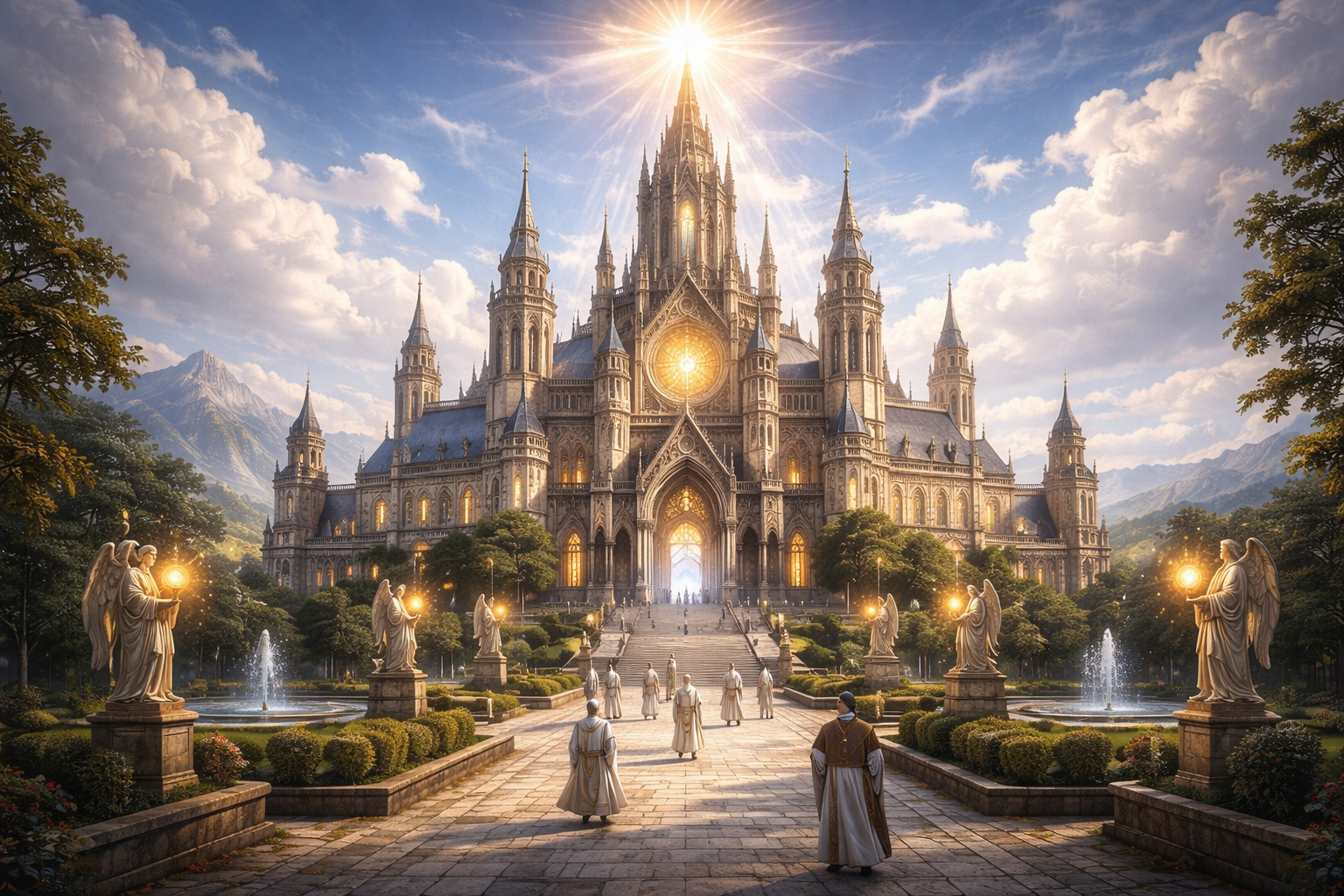
The Apostolic See is the formal religion of the Urbs, based upon the worship of the Holy Trinity. The Apostolic See is a hierarchical organization, composed of Clerics (Clergy) and non-Clerics (Laity). The hierarchy is as follows:
- Presbyter (Cleric)
- Deacon (Laity)
- Bishop (Cleric)
- Archdeacon (Laity)
- Archbishop (Cleric)
- Vicar (Laity)
- Cardinal (Cleric)
- Legate (Laity)
Each Cathedral is led by a Presbyter and governed by a Deacon. Cathedrals within a geographic area are grouped into a Diocese, which are led by a Bishop and governed by an Archdeacon. Dioceses are grouped into ecclesiastical Provinces, under the leadership of the Bishop of a particular Diocese, which is called the Metropolitan or Archdiocese. The Bishop of the Metropolitan is an Archbishop, and the Archdiocese is governed by the Vicar. The Metropolitans gather every so often to elect a Cardinal, who is the spiritual leader of the Apostolic See. The Cardinal then appoints a Legate as the secular leader of the Apostolic See.
In addition to the Clergy and Laity, the Apostolic See has several other organizations.
Benedictine Order
Although formally part of the Apostolic See, they are otherwise independent, with each congregation led by an Abbot. The Benedictine Order is dedicated to the preservation of knowledge, and they tend to the
Ledger of the Peerage nearest their Cloister. The Benedictine Order is known to have Bards in its ranks.
Within the Apostolic See, Bards serve as chroniclers, doctrinal interpreters, and custodians of authorized narrative rather than independent performers.
Dominican Order
The Dominicans are an order of mendicant Monks best described as the intelligence organization of the Apostolic See. Although they have Abbeys led by Abbots, they are rumored to answer to a Legate.
Franciscan Order
The Franciscans are an order of mendicant Clerics and Monks best described as the humanitarian organization of the Apostolic See. Novices and Initiates go to Dominican Abbeys for training; once completed, Franciscan Monks are itinerant.
Jesuit Order
The Jesuits are an order of Clerics, Monks, and Fighters (non-Templar, non-oathbound) best described as the academic and military organization of the Apostolic See. The Jesuit Order is led by the Superior General, with the headquarters of the society, the General Curia, in Neverwinter. They otherwise have no formal ranks, although in practice most Jesuits rank by seniority.
The Inquisition
The Inquisition is a group dedicated to the protection of the Apostolic See from heresy and corruption. The Inquisition is led by the Grand Inquisitor, who is also a Legate. The Inquisition is typically composed of Dominicans and Franciscans.
Templar
The Templar are a military Order of Clerics and Paladins, dedicated to the protection of the Apostolic See from supernatural threats. The Templar are led by the Grand Master, and are further divided into the Knights Templar, who are always members of the Peerage, and non-Peerage Paladins and Clerics. The basic unit is the Tredectet, a group of 12 Templar led by a Knight Templar.
A Tredectet therefore consists of thirteen members in total.
The membership and rank structure is as follows:
- Brother/Sister (War Domain Cleric)
- Paladin
- Squire
- Corporal
- Sergeant
- Master Sergeant
- Knight Templar (Paladin)
- Squire
- Sir/Dame
- Lord/Lady Commander (Leader of a Tredectet)
- Master
- Grand Master of the Templar
Magisterium
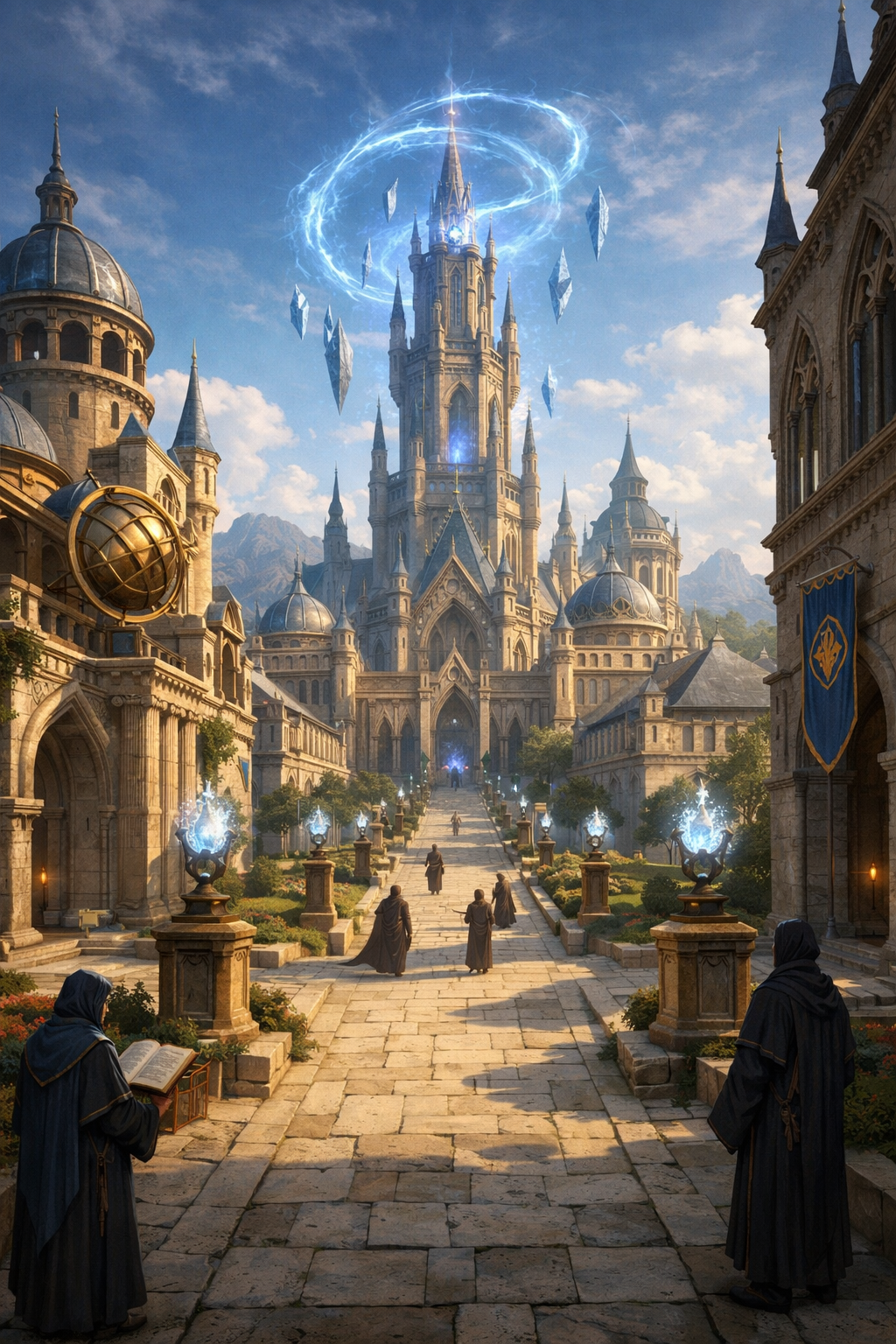
The Magisterium is an institution of Sorcerers, Artificers, and licensed Warlocks dedicated to the study, classification, and regulation of magical power. Each Urb has a Campus led by a Chancellor, with Neverwinter being among the most prestigious.
As with the Peerage, magical rank is encoded in the Ledger of the Magisterium, copies of which are maintained in each Campus library.
Ranks within the Magisterium are as follows:
- Initiate
- Adept
- Baccalaureate
- Magister
- Doctorate
- Distinguished Doctorate
- Provost
- Chancellor
Peerage
Property-owning nobility exist in all Civilizations, and titles are often hereditary. The exact holdings and ancestry are encoded in the Ledger of the Peerage, sometimes referred to by the Benedictines as the Blockchain for reasons lost to time. The Ledger is a kind of distributed magical artifact that associates the Title of a Holding with the genetic information of the current holder, indeed, the very definition of being a member of the Peerage is someone listed in the Ledger.
Ledger
Each Castela, Mine, and Urb has it’s own copy of the Ledger, which is an immutable history of all titles held by all nobles in all cultures on Mundus. The records of the Ledger stretch backwards in time for thousands of generations, and the vast amount of records in the Ledger means that only the largest Castelas, Mines, and Urbs have the resources to maintain an entire copy of the Ledger. Competing claims are often proposed in different copies of the Ledger, which is resolved by a kind of magical consensus based upon the number of copies of the Ledger that agree with a particular claim. Thus, successful claims are most often registered in the largest copies.
Castelan Titles
Elven Nobility is impossibly complex, and not well understood by outsiders. It is believed to be a combination of ancestry and merit. The exact title is often worn by the the individual as a piece of jewelry which reflects their Ledger entry.
Mine Titles
Amongst the Dwarves and Gnomes of the Mines, the following titles are recognized, in increasing order of precedence, along with the typical holdings and responsibilities.
- Thane (Clan)
- Jarl (Mine)
- King, Queen (Typically all the Mines on a Continent)
Urban Titles
The following are the titles recognized in the Urbs, in increasing order of precedence, along with the typical holdings and responsibilities.
- Baron, Baroness (Barony, the seat being a Summerday castle)
- Viscount, Viscountess (Viscounty, Several Baronies)
- Earl, Countess (County, Several Viscounties)
- Marquess, Marchioness (March, Several Counties)
- Duke, Duchess (Duchy, Several Marches)
As a March is the typical roaming area of an Urb, the Marquess or Marchioness is often the titular leader of the Urb. The Duke is often the leader of the Continent.
Equipment
Your starting equipment and gold are determined by your class and background. You don’t roll for gold. You may start with a trinket of your choice from available rules choices. You can sell starting equipment using the rules in the Player’s Handbook and can buy equipment and spell components found in the Player’s Handbook or available in the campaign.
In addition to the standard Equipment list, a variety of exotic items are in common use on Mundus.
Conveyances
There are a variety of ways to get around, starting with animal-based:
- Hippogriff
- Horse
- Manta Ray
- Pegasus
- Thunder Beast
There is also techno-magical transportation:
- Airship
- Crawler
- Horseless carriage
- Strider
- Submarine
Magical portals, temporary or otherwise, are also known to exist.
And of course, Castelas and Urbs are conveyances in their own right.
Firearms
 Image Credit: https://animalia-life.club/qa/pictures/popular-old-west-guns
Firearms on Mundus represent advanced industrial weaponry: precision-machined, repeatable, and lethal at range. The most common firearms are Revolvers and Lever-Action Rifles, with experimental variants emerging from Artificer guilds and forges.
Common Types
| Type | Cost | Damage | Weight | Properties |
|---|---|---|---|---|
| Derringer | 120 gp | 1d8 piercing | 1 lb. | Ammunition (range 20/60), reload (2), light, concealable, Vex |
| Light Revolver | 200 gp | 2d6 piercing | 2 lbs. | Ammunition (range 30/90), reload (6), light, Nick |
| Heavy Revolver | 350 gp | 2d8 piercing | 3 lbs. | Ammunition (range 40/120), reload (6), Push |
| Lever-Action Rifle | 600 gp | 2d10 piercing | 8 lbs. | Ammunition (range 80/240), reload (8), two-handed, Slow |
| Repeating Carbine | 750 gp | 2d8 piercing | 6 lbs. | Ammunition (range 60/180), reload (10), two-handed, Slow |
| Shotgun | 700 gp | 3d6 bludgeoning | 8 lbs. | Ammunition (range 20/60), reload (2), two-handed, spread, Topple |
| Ammunition (Rounds) | 3 gp | – | 1 lb. | 20 metallic cartridges |
Concealable: This weapon can be hidden on a creature’s person; detecting it requires an active search or magic.
Use
Firearms discharge one metallic cartridge per shot. Revolvers and repeating firearms may fire once per attack.
Certain class features (such as those of the Gunslinger) may allow special shots, trick attacks, or multiple attacks per round. Note that Weapon Masteries only apply to Gunslingers.
For firearms, the Nick Weapon Mastery represents rapid follow-up shots and does not enable melee attacks.
Reloading
Reloading a firearm restores expended shots to its listed reload capacity. Partial reloads do not restore a firearm to full effectiveness unless explicitly stated by a feature.
- Reloading a firearm normally requires an Action.
- A character with proficiency in Firearms may reload as a Bonus Action.
- Characters with the Gunner Feat or Gunslinger class may reload more efficiently, as described in those abilities.
Artificer-Infused firearms (such as those using Repeating Shot) ignore reload limits while infused, provided suitable ammunition components are available.
Armor Effects
Light Armor provides no special resistance against firearms.
Medium Armor provides Damage Resistance to firearm damage from weapons with the spread property.
In addition to the effects of Medium Armor, Heavy Armor provides Damage Resistance to firearm damage from weapons without the two-handed property.
Magic Items
Adamantium
Black and non-metallic, Adamantium is the hardest known substance on Mundus. Adamantium seems to drink in the light, and is non-reactive to both fire and acid. Adamantium is highly prized for it’s lightness and durability, and can only be worked by Artificers.
Weapons made of Adamantium cause Critical Hits on a roll of 19 or 20.
Armor made of Adamantium is half the weight, and the wearer is immune to Critical Hits.
Adamantium bullets do not have their damage reduced by armor.
Spellcasting
Spellcasting in Mundus Atrox requires all of the following:
- Access to a spell (known or prepared)
- The ability to channel the spell’s level
- A valid power medium capable of expressing the spell
Spell Knowledge and Preparation
Classes access spells in different ways, but only spells that are known or prepared can be cast.
- Artificers prepare spells via devices, infusions, and Mana Batteries (see [artificer.md]).
- Bards and Sorcerers cast from a list of known spells.
- Clerics and Druids prepare spells daily through their connection to divine or natural forces.
- Warlocks use Pact Magic spell lists granted by otherworldly patrons.
Sources of Power
Inert Conduits (Artificers)
Artificers do not possess Mana internally. Instead, they rely on crafted items and Mana Batteries to collect and channel magical effects. Their spellcasting is enabled by technology and infusion rather than personal magical reserves.
An Artificer must be wielding, wearing, or actively operating a Mana Battery or infused device to cast spells. If separated from all such conduits, the Artificer cannot cast spells.
Living Resonance (Bards)
Bards attune to living creatures, emotions, voice, and presence. Their magic arises from resonance with life and culture, requiring connection to living beings to cast spells effectively.
To cast spells, a Bard must be able to speak, sing, or otherwise perform. If silenced, gagged, or unable to express performance, the Bard cannot cast spells.
Divine Power (Clerics)
Clerics act as conduits for divine power. Mana flows through them by virtue of their authority and favor granted by a deity or higher power, rather than being owned internally.
Clerics must be capable of prayer, invocation, or ritualized action appropriate to their faith. Effects that suppress divine influence or sever the Cleric from their deity may prevent spellcasting.
Ecological Power (Druids)
Druids require a living ecological field to channel magic. Their power depends on the vitality and balance of natural systems around them, making their spellcasting intimately tied to living environments.
Druids must be in contact with a living ecological field to cast spells. In sterile, dead, or fully collapsed environments, Druid spellcasting may be limited or impossible at the DM’s discretion.
Elemental Power (Sorcerers)
Sorcerers draw upon innate elemental Mana, an internal reservoir of raw magical energy tied to their bloodline and essence. This elemental Mana fuels their spellcasting directly.
Sorcerers must be conscious and capable of controlled exertion. Effects that suppress bodily control, breath, or elemental expression may prevent spellcasting.
Otherworldly Power (Warlocks)
Warlocks wield Pact Magic granted by external wills or entities. Their power is not derived from Mana but from the authority and contracts established with otherworldly patrons.
Warlock spellcasting requires the continued allowance of the patron’s will. Effects that block planar influence or patron contact may interfere with Pact Magic.
Attuned Casters
Some classes express magic through Essence attunement—a direct resonance between body, will, and instinct. This magic is neither Mana-driven nor externally granted.
Paladins and Rangers are Attuned Casters. Their magic is sustained internally and expressed through disciplined conviction or instinctive alignment.
Essence Attunement
Attuned spells are bound directly to the caster’s Essence. They do not consume Mana and are unaffected by Mana Burn. Attuned magic is suppressed only when the caster’s Essence is disrupted, such as through extreme exhaustion or effects that negate supernatural abilities entirely.
Paladins
Paladins wield magic as an oath-bound resonance, channeling the force of their convictions and sacred vows. Their spells and features—including divine smites—are attuned manifestations, not Mana-driven spells. Paladins do not use Mana and cannot interact with Mana Batteries; their power is sustained through their unwavering resolve and oath.
Rangers
Ranger magic arises from instinctive attunement to the land, prey, and the living world. Their spells are attuned techniques, not channeled through Mana. Rangers do not use Mana, and their magic is shaped by their ecological awareness and connection. Environmental conditions may affect them narratively, but not mechanically, unless otherwise specified.
Attuned Casters stand between mundane mastery and true Mana channeling. Their magic is reliable and limited, drawn from within and sustained by their own Essence rather than external sources.
Spell Level
The character must be capable of channeling magical power of the spell’s level to cast it.
Example: A 5th-level Cleric can channel spells up to 3rd level.
Mana
Mana is one of several power media used in Mundus Atrox spellcasting. Only Bards, Clerics, Druids, and Sorcerers draw upon Mana directly.
Artificers channel Mana exclusively through external devices, Warlocks rely on Pact Magic, and Attuned Casters express magic through Essence rather than Mana.
The risks of Mana use—such as Mana Burn and its ecological consequences—are described below and in Mana.
Environmental Effects
Environments can affect spellcasting differently depending on the caster’s source of power. Spells that use an Attack Roll normally generate Critical Hits on a roll of 20.
Certain spells have enhanced effects in specific environments, as follows:
A spell with a damage type matching the environment generates a Critical Hit on a 19 or 20 Attack Roll. Likewise, Saving Throws are at Disadvantage.
| Damage Type | Environment |
|---|---|
| Radiant | Summerday |
| Necrotic | Winternight |
| Acid | Acid Rain |
| Cold | Blizzard |
| Lightning | Thunderstorm |
| Thunder | Thunderstorm |
| Fire | Active volcano |
| Force | The Arch is visible |
Example: A roll of 19 with a Javelin of Lightning during a Thunderstorm triggers a Critical Hit on the target for 2d6 Piercing + 8d6 Lightning. The creatures between the thrower and the target do not receive Critical Hits, but they make a Dexterity Save for half damage at Disadvantage.
Wild Magic Sorcerers trigger a Wild Magic Surge on a spellcasting Attack Roll of 20.
Example: A Wild Magic Sorcerer rolls a 20 to Critical Hit a target with a Ray of Enfeeblement during Winternight. He also triggers a Wild Magic Surge.
Consequences of Magic Use
Mana casters risk Mana Burn when exceeding the limits of safe channeling. Mana Burn represents cosmological strain placed on the caster and the surrounding world by forcing Mana beyond sustainable bounds.
Mana Burn applies only to Mana casters:
- Bards
- Clerics
- Druids
- Sorcerers
Artificers (who rely on Mana Batteries), Warlocks, and Attuned Casters do not suffer Mana Burn.
Triggers
Mana Burn is triggered when a Mana caster:
- Casts a spell leaving 0 Mana remaining
- Casts a second spell of 6th level or higher without completing a Long Rest
- Casts spells repeatedly in a Blighted or Corrupted area (at the DM’s discretion)
Mana Burn Save
When Mana Burn is triggered, the caster must make a Constitution saving throw with a DC equal to:
10 + the spell’s level
Results
-
Success: The spell resolves normally. The caster shows visible signs of strain (narrative effect only).
-
Failure: The caster suffers Mana Burn. The DM chooses or rolls one or more appropriate consequences:
- Gain 1 level of Exhaustion
- Take force damage equal to (spell level × d6)
- Suffer disadvantage on spell attack rolls and spell save DCs until the caster takes a Long Rest
- Leave behind a minor magical scar or subtle environmental disturbance
- Trigger a Wild Magic Surge if the caster is a Sorcerer.
Escalation
Repeated Mana Burn failures within a single day may worsen consequences or contribute to Blight and Collapse at the DM’s discretion.
Mana Burn is not a sign of weakness or failure. It is the natural consequence of mortals channeling a force that was never meant to be held indefinitely.
Mana
Mana is a fundamental cosmological force that permeates Mundus, shaping and sustaining magical energies. It is not merely learned or memorized magic but an intrinsic energy source drawn from the fabric of reality itself. Spellcasters attune to Mana through their connection to different cosmic media, channeling it to manifest their powers.
Spellcasting with Mana
Bards, Druids, and Sorcerers harness Mana as the fuel for their spellcasting. They draw upon their innate or divine connection to Mana to cast spells, expending it in the process.
Warlocks, however, do not use Mana. Their Pact Magic operates independently, relying instead on otherworldly pacts and invocations.
Spell Mana Costs (DMG Spell Point Variant)
| Spell Level | Mana Cost |
|---|---|
| Cantrip | 0 |
| 1st | 2 |
| 2nd | 3 |
| 3rd | 5 |
| 4th | 6 |
| 5th | 7 |
| 6th | 9 |
| 7th | 10 |
| 8th | 11 |
| 9th | 13 |
Casting a spell at a higher level (up-casting) costs Mana equal to the level at which the spell is cast.
Mana by Level (Full Mana Casters)
| Level | Max Spell Level | Mana |
|---|---|---|
| 1 | 1st | 4 |
| 2 | 1st | 7 |
| 3 | 2nd | 12 |
| 4 | 2nd | 17 |
| 5 | 3rd | 24 |
| 6 | 3rd | 30 |
| 7 | 4th | 37 |
| 8 | 4th | 44 |
| 9 | 5th | 53 |
| 10 | 5th | 63 |
| 11 | 6th | 68 |
| 12 | 6th | 73 |
| 13 | 7th | 78 |
| 14 | 7th | 83 |
| 15 | 8th | 89 |
| 16 | 8th | 94 |
| 17 | 9th | 104 |
| 18 | 9th | 114 |
| 19 | 9th | 124 |
| 20 | 9th | 133 |
High-Level Spell Limits
Spellcasters may cast only one spell per Long Rest at each of the 6th, 7th, 8th, and 9th spell levels. A caster may voluntarily attempt to cast a second spell of this level between Long Rests, which automatically triggers Mana Burn. Even on a successful save, this magic places severe strain on the caster and the surrounding environment.
Rest and Recovery
A Long Rest fully restores a spellcaster’s Mana pool.
During a Short Rest, a spellcaster may recover Mana by stabilizing their connection to its source. The first Short Rest after a Long Rest restores Mana equal to twice the caster’s Proficiency Bonus; the second restores Mana equal to the caster’s Proficiency Bonus. A typical adventuring cycle assumes one Long Rest and up to two Short Rests.
Prepared and Known Spells
- Bards and Sorcerers have a fixed number of spells known.
- Clerics and Druids prepare spells daily as normal.
- Always Prepared spells affect which spells are accessible but do not grant or consume additional Mana.
Class-Specific Mana Sources
Artificers and Mana Batteries
Artificers do not possess inherent Mana and instead rely on specially crafted Mana Batteries to store and channel magical energy. An Artificer may be attuned to only one Mana Battery at a time; re-attuning to a different Mana Battery requires a Short Rest.
| Level | Battery Capacity |
|---|---|
| 1–4 | 6 |
| 5–8 | 14 |
| 9–12 | 27 |
| 13–16 | 44 |
| 17–20 | 64 |
Artificers may cast spells only up to 5th level using Mana drawn from their Mana Batteries.
Bard (Living Resonance)
Bards harness Mana through living resonance—the power of stories, music, and emotion that vibrate through Mundus.
Cleric
Cleric spell access remains unchanged and uses divine connection, which is the will and power of the Deity.
Druid (Ecological Field)
Druids attune to the ecological fields of the natural world, drawing Mana from the living landscape and its cycles.
Sorcerer (Innate / Elemental)
Sorcerers draw Mana from their innate elemental or cosmic heritage, channeling raw energies that flow through their being.
Warlocks
Warlocks’ Pact Magic remains unchanged and does not use Mana. Their power derives from pacts and invocations rather than Mana pools.
Ritual Casting
Ritual spells require that the caster have sufficient Mana available to begin the ritual, but the Mana is not expended. Instead, the caster attunes the spell to ambient Mana in the environment.
Mana is shaped and filtered through each caster’s unique medium, reflecting their place in the cosmos. This living energy flows through the multiverse, connecting beings and worlds in a web of power and possibility.
Campaign Journals
Session notes and campaign history for the Mundus Atrox campaigns.
Campaigns
Breaking Dead (Current)
The current campaign in the Mundus Atrox world.
Neverwinter Knights (Complete)
The first campaign in the Mundus Atrox setting. The party explored the world, uncovered ancient mysteries, and faced threats from the Underdark and beyond. 35 sessions from start to conclusion.