Goliaths
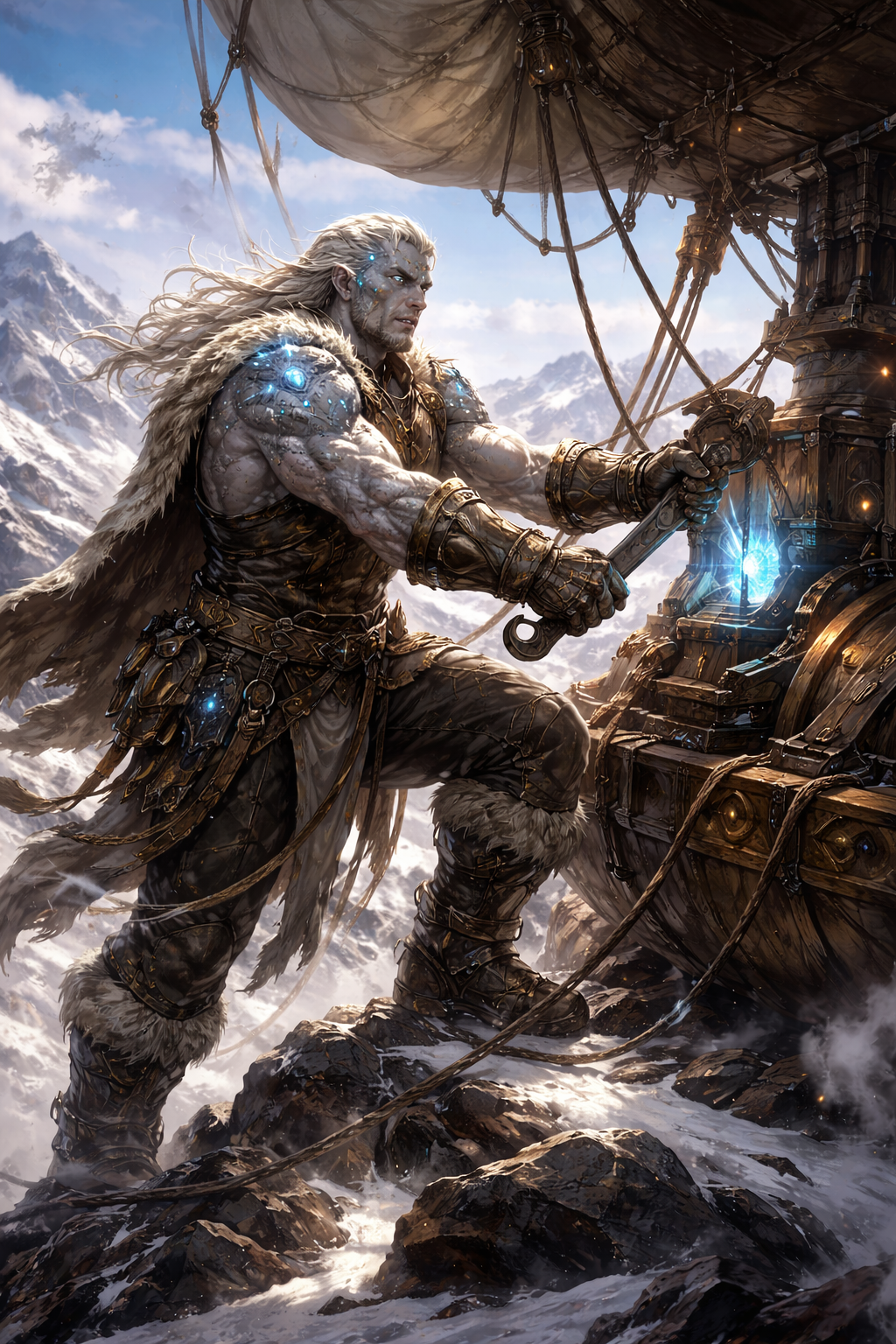
Goliaths are the descendants of the Giants’ enduring presence in the world—not heirs to their authority, but to their exposure. Among the Populi, Goliaths are those most accustomed to living where the forces that shape Mundus are least mediated: high wind, crushing storms, unstable stone, and raw Mana flow.
Where others seek shelter, Goliaths seek contact.
Origins and Giant Lineage
All Goliaths trace their ancestry to one of the great Giant lineages. This inheritance does not grant dominion, but adaptation—each lineage reflecting a way of surviving sustained contact with overwhelming forces.
Common lineages include:
- Storm Lineage — attuned to lightning, wind, and pressure; often found on exposed Castelas or high peaks where the sky bears down on the land.
- Stone Lineage — resilient and unyielding; adapted to faulted plateaus, escarpments, and load-bearing structures.
- Frost Lineage — tempered by cold and scarcity; accustomed to endurance where warmth and certainty are rare.
- Fire Lineage — forged in heat and upheaval; resilient amid volcanic regions, furnaces, and Mana-scarred ground.
- Hill Lineage — adaptable and tireless; thriving where terrain shifts, erodes, or refuses permanence.
These lineages are not cultures so much as responses. A Goliath’s lineage shapes how they endure, not what they rule.
Relationship to Power
Goliaths do not define power as authority, inheritance, or accumulation. To them, power is the ability to remain standing when conditions worsen.
They respect strength that endures, not strength that overwhelms.
This philosophy places Goliaths at odds with rigid hierarchies and unchecked ambition alike. Leadership among Goliaths is practical and conditional, ending when it ceases to serve survival.
In times of Blight or Ecological Collapse, Goliaths often outlast populations that were better protected but less prepared.
Goliaths and Habitat
Goliaths are most commonly found in Castelas and high-altitude regions that functionally resemble them—exposed, elevated, and difficult to access. Many Castelas rely on Goliath communities to maintain outer structures, weather-facing systems, and emergency response during storms or Mana surges.
They avoid dense Urbs, which they find constricting and disorienting, and almost never settle in the Mines. Enclosed environments limit awareness and response—qualities Goliaths consider dangerous.
Culture and Society
Goliath society is organized around small, resilient communities bound by shared trials rather than ancestry alone. Lineage matters, but demonstrated endurance matters more.
Common cultural values include:
- personal accountability
- respect earned through action
- clarity in decision-making
- acceptance of loss without resentment
Competition exists, but it is rarely cruel. Trials are designed to reveal limits, not to destroy those who fail.
Goliaths in the Modern Age
As storms intensify and Castelas face increasing strain, Goliaths have become more visible across Mundus. Their skills are in high demand where infrastructure fails and environments turn hostile.
Some scholars note that Goliaths appear more frequently near regions of Mana instability, though whether this reflects migration, birth, or adaptation remains uncertain.
Adventurers and Pathfinders
Many Goliaths leave their high places not out of restlessness, but necessity. Adventuring offers exposure to unfamiliar challenges and the opportunity to test oneself beyond known limits.
Goliaths often gravitate toward roles involving:
- frontline endurance
- environmental hazard response
- protection during retreat or evacuation
They measure success not by survival alone, but by how many others endure alongside them.
Perception by Others
To other Populi, Goliaths can appear blunt, intimidating, or indifferent. In truth, they are simply unaccustomed to excess explanation or indirect speech.
Their most enduring reputation is that of weathered pillars—figures who remain standing when structures fail and others flee.
What is certain is this:
Goliaths endure where the world itself is breaking.