Silos
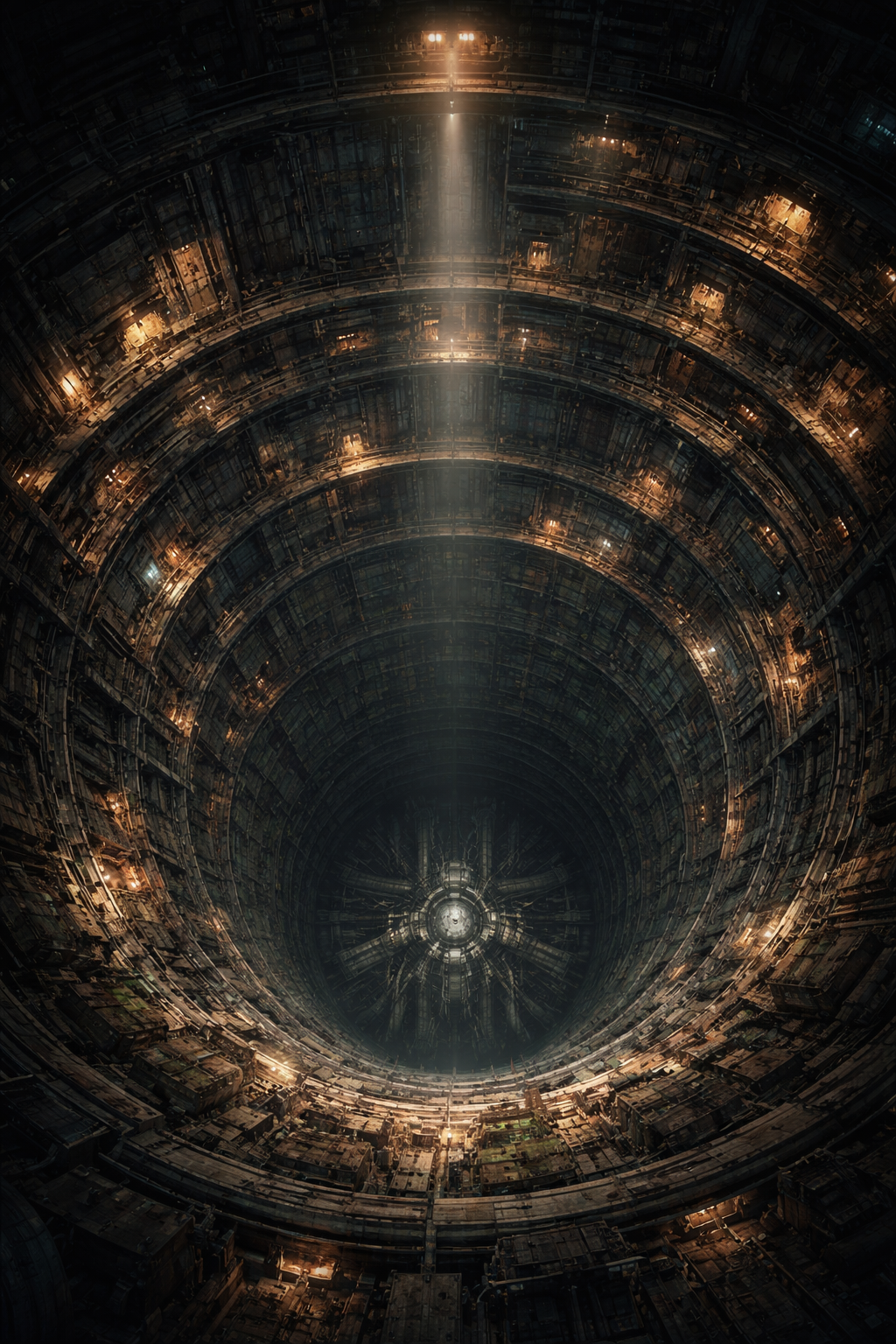
Silos are among the deepest and most enigmatic structures found beneath the surface of Mundus. They are not cities, nor fortresses, nor mines—yet they have served as all three at different points in history.
To most of the Populi, Silos are ancient shelters whose origins are lost to time. To scholars, they are inconvenient mysteries: too consistent to be natural, too uniform to be the work of mortal hands, and too resilient to have been intended merely as refuge.
Form and Structure
All Silos, regardless of size or location, follow the same underlying design.
At their core is a vast vertical shaft, extending six or more stories downward into the earth. Around this central void are ringed levels—walkways, chambers, and access corridors arranged with precise regularity. The shaft itself is smooth, reinforced, and unnervingly straight, as though it were never meant to be traversed by living beings at all.
At the lowest levels lie colossal, dormant mechanisms embedded into the structure of the Silo itself. Their purpose is unknown. Their scale alone places them beyond the ability of nearly all living Artificers to repair, alter, or even fully dismantle.
These lower chambers are often sealed, avoided, or repurposed only at their edges.
Repurposing and Survival
During Winternight—the winter season, when night stretches long and the dead rise in uncountable numbers—Silos became sanctuaries. Communities learned—often through loss—that no surface settlement could endure such cycles without retreat, and so they fled downward, sealing themselves behind stone and steel they did not understand but trusted to endure.
What saved them was not the Silo’s original purpose, but its resilience.
In the centuries since, Populi have adapted Silos for survival. The lowest accessible levels are typically converted to support life:
- machines that draw water from air and stone
- chambers that generate heat, power, and steady light
- vaults for grain cultivated during Summerday, the long season of light, and processed below
- workshops and maintenance halls
These systems are maintained primarily by Dwarves, Gnomes, and—where available—Artificers, though even they admit much of the underlying structure operates by principles no longer understood.
The deeper machinery remains unused, its function guessed at but never confirmed.
Communities of the Deep
Over time, permanent settlements have grown around Silos. Farming communities cultivate the surrounding land during the warmer seasons, storing surplus within the Silo itself. As Winternight approaches each cycle, the population withdraws below, sealing the upper access points until the long night passes.
Such communities value stability over mobility. Unlike the roaming Urbs or the ever-delving Mines, Silo settlements endure by remaining where they are—anchored to something that has already proven it can survive catastrophe.
Many Populi consider Silos unsettling, yet dependable. They are places of last refuge, not ambition.
Echoes of the Past
Records of the ancient war that devastated many Silos are fragmentary. Some structures show signs of immense internal damage—walls scorched, chambers collapsed, entire lower levels fused or shattered. Others remain inexplicably intact.
That all Silos share the same design has led to uncomfortable questions.
Why were so many built?
Why were they aimed skyward?
And what enemy required such preparation?
No consensus exists.
Most prefer not to speculate.
Silos in the Present Age
As Blight spreads and Ecological Collapse worsens, interest in Silos has renewed. Some see them as the safest future for rural Populi. Others fear that relying too heavily on structures whose true purpose is unknown invites disaster.
What is undeniable is this:
Silos were built to endure the end of something.
Whether that end has already come—or is yet to arrive—remains an open question.