Orcs
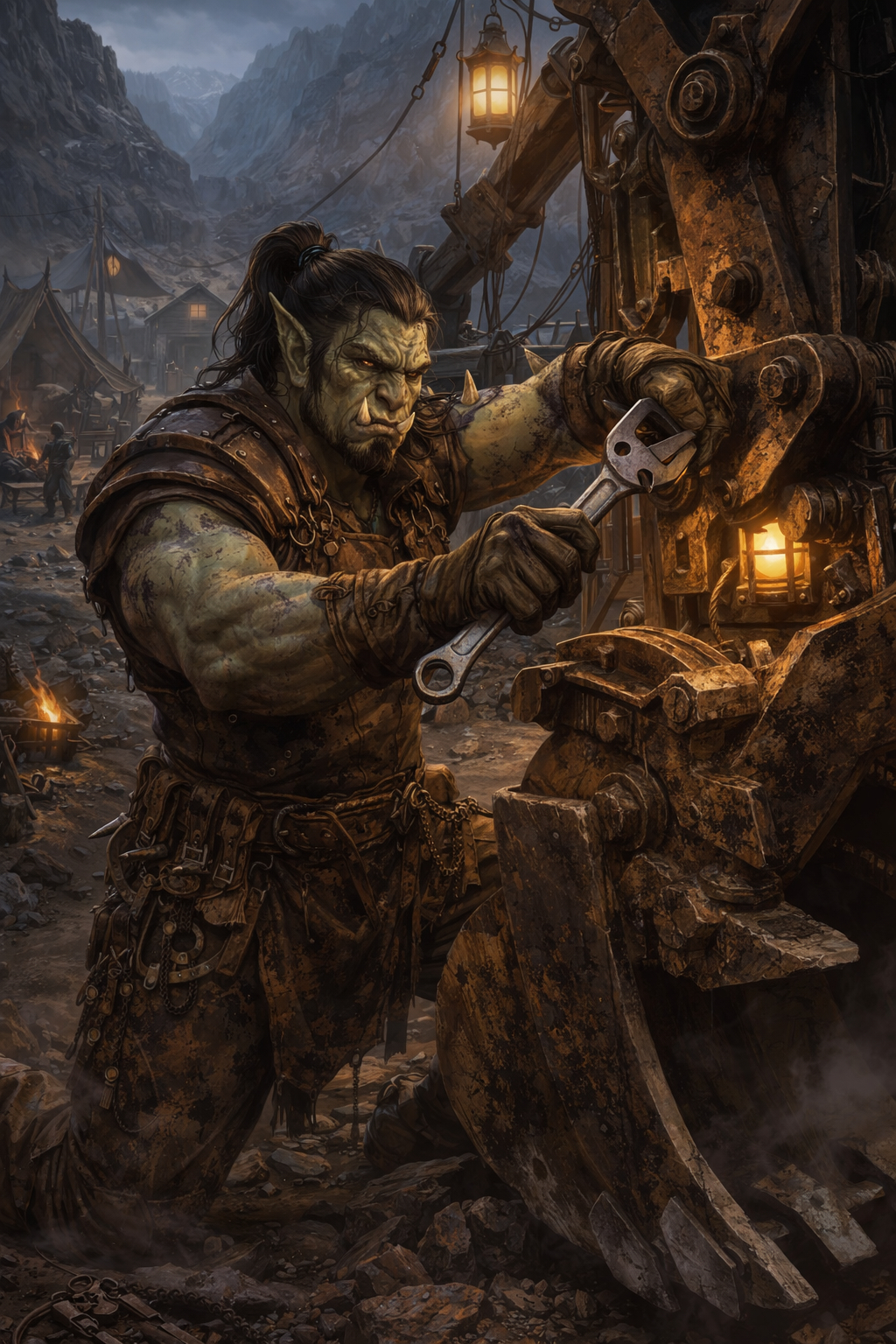
Orcs are a people forged at the margins—where stability thins and survival demands resilience rather than comfort. Among the Populi, Orcs are most often found at the frontiers of habitation, living where Urbs fray, Mines break into open scar, and Blight presses hardest against settled land.
Where others retreat from hardship, Orcs remain.
Origins and Adaptation
Orcs emerge most readily in regions marked by conflict, scarcity, or ecological strain. Their strength, stamina, and adaptability are not marks of savagery, but of selection: traits that persist where conditions refuse to soften.
They are not bound to a single environment. Instead, Orcs adapt quickly to whatever ground they claim—rock, ash, forest edge, or ruined city.
This adaptability has led many scholars to describe Orcs not as a culture of conquest, but as a culture of survival under pressure.
Relationship to Power
Orcs understand power as the ability to endure loss and continue forward.
Authority among Orcs is practical and provisional. Leaders rise because they protect the group, secure resources, or make difficult decisions others avoid. When they fail, they are replaced—sometimes peacefully, sometimes not.
Orcs respect strength that serves survival, not domination for its own sake.
In regions afflicted by Blight or Ecological Collapse, Orc communities often persist long after other settlements have failed.
Orcs and Habitat
Orcs are most commonly found near the boundaries between Urbs and Mines—in quarry-towns, frontier camps, ruined districts, and temporary strongholds built from scavenged material.
They rarely inhabit Castelas, which they view as inaccessible, inflexible, and detached from the realities of survival. Elevated isolation offers little advantage when resources must be defended directly.
Orc settlements are often temporary by design, intended to be abandoned when conditions worsen beyond recovery.
Culture and Society
Orc society emphasizes cohesion under strain. Loyalty is earned through shared hardship rather than blood alone.
Common cultural values include:
- resilience over comfort
- honesty over diplomacy
- adaptability over tradition
- protection of the vulnerable within the group
Violence is not glorified, but neither is it avoided when survival is at stake.
Orcs in the Modern Age
As Mana Burn and ecological instability become more widespread, Orc populations have increased in visibility across Mundus. Some interpret this as expansion; others recognize it as persistence.
Orcs are often the last to abandon failing regions—and the first to return when others consider them lost.
Adventurers and Frontliners
Many Orc adventurers leave their communities not out of ambition, but necessity. Travel offers access to resources, alliances, and knowledge that can be brought back to those still holding the line.
Orcs commonly excel in roles involving:
- frontline defense
- holding ground under pressure
- recovery and rebuilding after collapse
They judge success not by victory, but by what remains standing afterward.
Perception by Others
To other Populi, Orcs are frequently mischaracterized as aggressive or uncivilized. In truth, their directness reflects environments where ambiguity is costly.
Among those who live near the edges of collapse, Orcs are often respected as keepers of the last ground—the ones who endure when others withdraw.
What is certain is this:
Orcs remain where survival itself is contested.