Tieflings
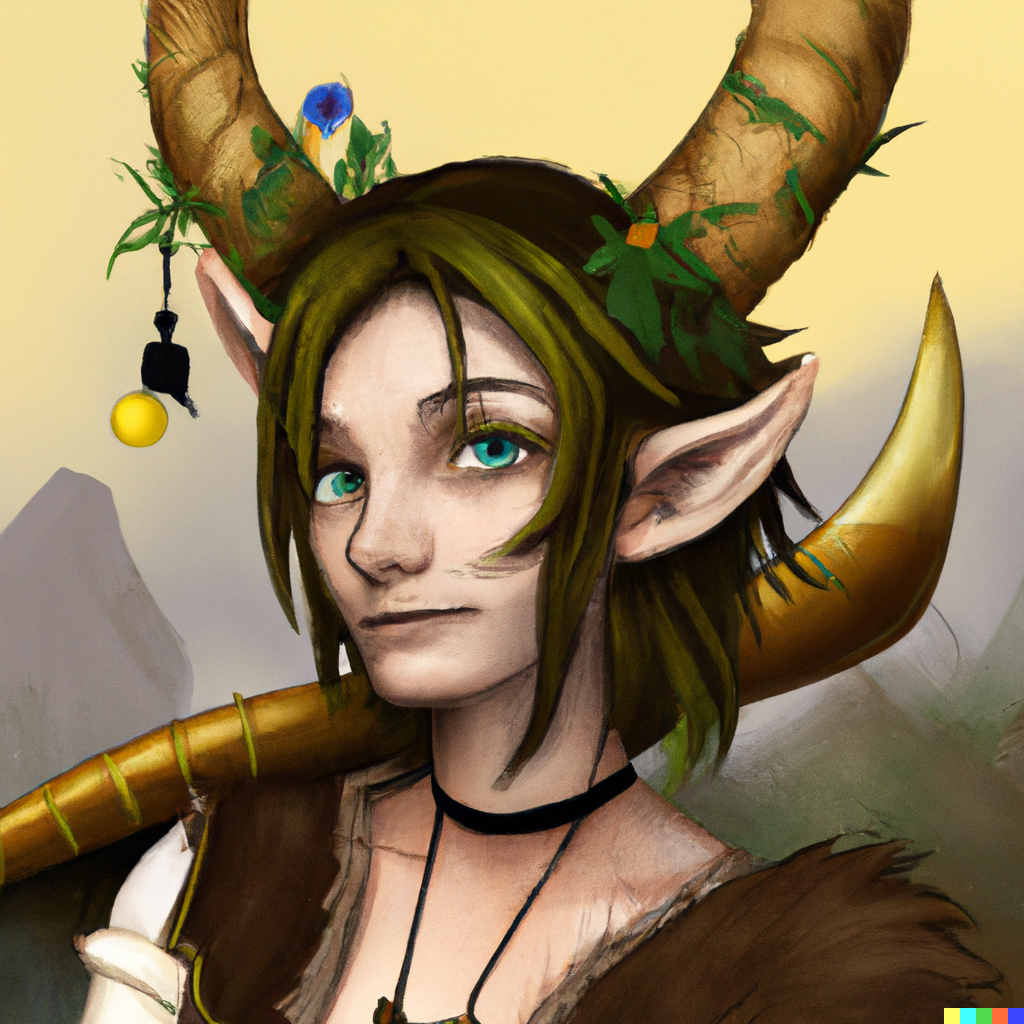
Tieflings are people shaped by fracture rather than alignment. Where Aasimar reflect a distant divine order, Tieflings bear the marks of disruption—heritage altered by contact with forces that warped, inverted, or scarred what once was whole.
They are not born from evil intent, nor do they share a common origin. What unites Tieflings is not ancestry, but consequence.
Origins and Fracture
In Mundus Atrox, Tieflings arise when bloodlines pass through regions of prolonged instability: places marked by Blight, repeated Mana Burn, planar thinning, or the collapse of long-held structures—ecological, social, or spiritual.
Some Tieflings descend from families that survived catastrophe. Others emerge where communities endured generations under strain. In all cases, the transformation reflects exposure, not choice.
Where Aasimar inherit orientation toward divine order, Tieflings inherit the memory of deviation from it.
Relationship to Power
Tieflings do not channel power through worship or lineage alone. Their abilities manifest as controlled instability—expressions shaped by what has been broken and then endured.
They often display:
- unusual resistances or tolerances
- powers that flare under stress rather than calm
- instincts attuned to unstable environments
This makes Tieflings unusually capable in regions others abandon, but also marks them as unpredictable in times of peace.
Tieflings and Habitat
Tieflings are most commonly found in Urbs, particularly in lower districts, ruins reclaimed for habitation, or neighborhoods built atop unstable Mana flows. They are also present near the edges of Mines where excavation has thinned the world’s fabric.
They are rarely found in Castelas. Elevated strongholds tend to reject prolonged instability, and Tieflings often report discomfort or outright exclusion in such places.
Culture and Community
Tieflings rarely form large, unified societies. Instead, they gather in small, adaptive communities bound by shared experience rather than tradition.
Common cultural traits include:
- mutual protection over hierarchy
- pragmatism over ideology
- identity shaped by action rather than origin
- skepticism toward inherited authority
Trust is earned slowly, but once given is fiercely maintained.
Tieflings in the Modern Age
As Ecological Collapse accelerates and Mana Burn becomes more common, Tieflings are appearing with greater frequency across Mundus. Some scholars believe this reflects widening instability rather than population growth.
In failing regions, Tieflings are often among the first to adapt—and the last to leave.
Adventurers and Survivors
Many Tieflings become adventurers because remaining would mean stagnation or erasure. Travel offers opportunity, leverage, and the chance to define oneself beyond inherited marks.
Tieflings excel in roles involving:
- exploration of unstable zones
- negotiation across social boundaries
- survival in environments others consider uninhabitable
They measure success not by purity or redemption, but by persistence.
Perception by Others
To many Populi, Tieflings remain unsettling—reminders that the world can change people without their consent. Suspicion lingers even where laws protect them.
Among those who live near Blight, collapse, or social fracture, Tieflings are often respected as proof that survival does not require perfection.
What is certain is this:
Tieflings endure where order has failed—and continue forward nonetheless.